

You know that feeling when something bothers you, but you can't quite name what it is? Emotional overwhelm is common, and most people never learn a structured way to process what they feel. The good news is that mindfulness techniques can help you notice and process emotions effectively, building real clarity over time. This guide walks you through the science, the tools, and the exact steps to reflect on your feelings in a way that actually improves your well-being. By the end, you'll have a practical system you can use every single day.
Table of Contents
- Why reflect on your feelings?
- Gather your self-reflection tools
- Step-by-step guide: How to reflect on your feelings
- Common mistakes and troubleshooting your practice
- Measuring progress: What to expect and how to evolve
- Our perspective: Why reflection matters more than you think
- Next steps: Bring self-reflection into your daily life
- Frequently asked questions
Key Takeaways
| Point | Details |
|---|---|
| Structured reflection boosts health | Expressive journaling and mindfulness techniques reduce stress and improve your immune system. |
| Preparation matters | Choosing the right tools and environment makes emotional reflection easier and more effective. |
| Self-compassion is key | Being kind to yourself during reflection prevents criticism and leads to real growth. |
| Track progress | Notice emotional labeling, reduced stress, and more intentional behavior as signs of successful practice. |
Why reflect on your feelings?
Most people think reflection means sitting quietly and hoping things make sense. It doesn't work that way. True emotional reflection is an active, intentional process, and the benefits of self-reflection go far beyond feeling a little calmer. It builds emotional clarity, strengthens resilience, and helps you understand the patterns driving your behavior.
There's a critical difference between venting and intentional processing. Venting releases pressure temporarily, but it doesn't create insight. Intentional reflection asks: What am I feeling? Why? What does this tell me about my needs? That shift in framing changes everything.
The science backs this up strongly. Psychologist James Pennebaker found that expressive writing improves immune markers and reduces medical visits among regular practitioners. That's a physical health benefit from an emotional practice. The mind and body are more connected than most people realize.
Here's a quick look at what structured reflection actually delivers:
| Benefit | Short-term effect | Long-term effect |
|---|---|---|
| Emotional clarity | Reduced confusion | Stronger self-knowledge |
| Stress reduction | Lower cortisol | Better immune function |
| Resilience | Faster recovery | Fewer emotional spirals |
| Decision-making | Clearer priorities | More intentional choices |
"Writing about emotional experiences, as opposed to trivial topics, has been found to produce long-term health benefits in both physical and psychological domains."
Key benefits you can expect from consistent practice:
- Faster ability to name and label emotions
- Reduced anxiety and rumination
- Improved relationships through better emotional communication
- Greater sense of personal agency
- Deeper alignment with your core values
Building an emotional well-being workflow around reflection doesn't require hours. Even ten minutes a day, done consistently, creates measurable change.
Gather your self-reflection tools
Before you can reflect well, you need the right setup. This isn't about buying expensive equipment. It's about removing friction so the practice actually happens.
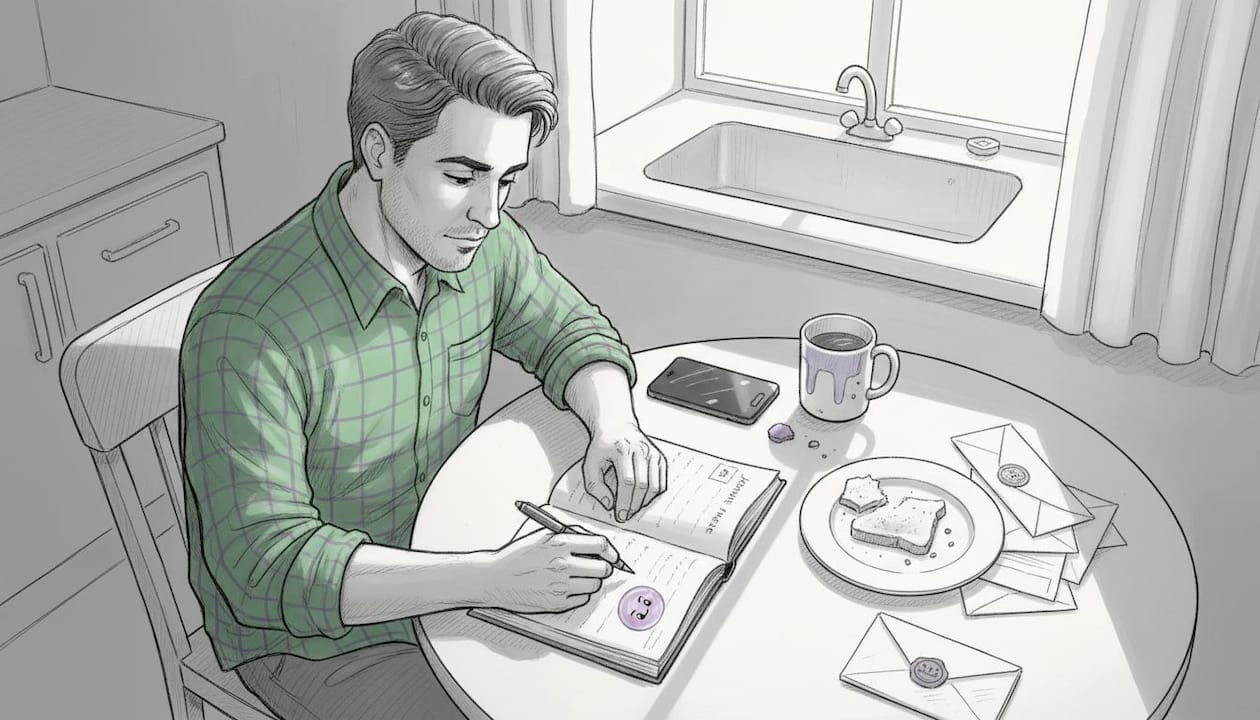
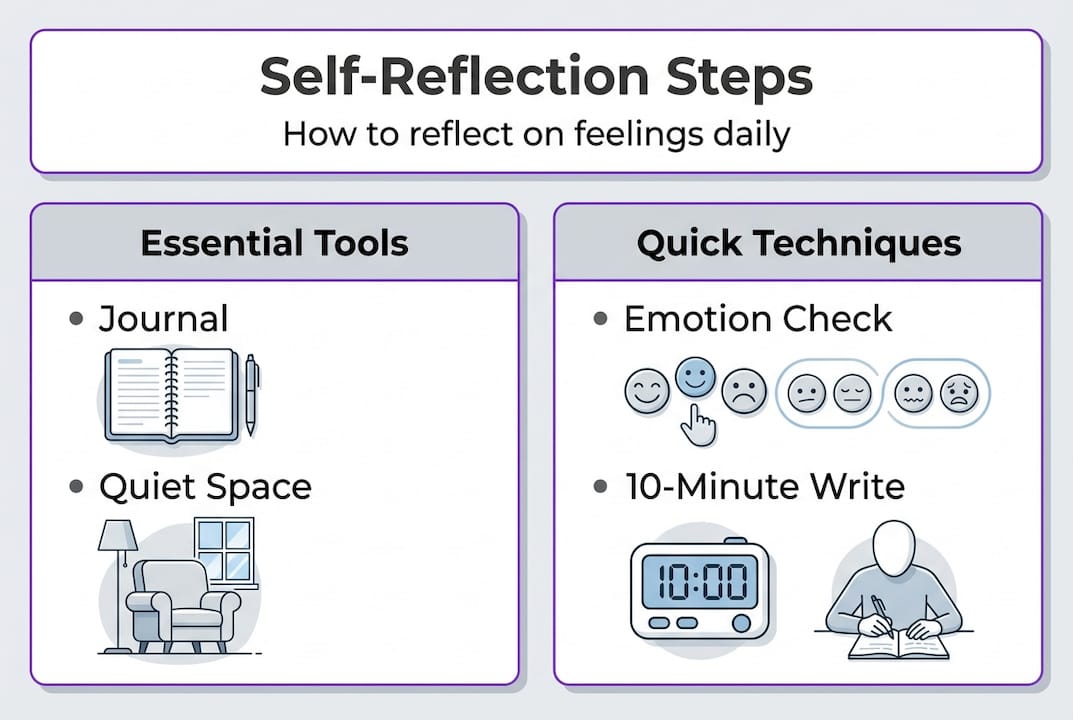
The core tools are simple. A journal and pen work beautifully for many people because the physical act of writing slows your thinking down. If you prefer digital, a notes app or a dedicated journaling platform gives you search, tagging, and mood tracking features. Voice memos are a great option if you process better by speaking out loud.
Here's how the main formats compare:
| Format | Best for | Drawback |
|---|---|---|
| Paper journal | Deep focus, no distractions | Hard to search or track patterns |
| Digital notes app | Convenience, anywhere access | Easy to get distracted by phone |
| Voice memo | Verbal processors, on-the-go | Harder to review and analyze |
| Journaling app | Guided prompts, mood tracking | Requires consistent app habit |
As mindfulness and journaling are both accessible, evidence-based tools for emotional awareness, the best format is simply the one you'll actually use. Don't overthink the medium.
Your environment matters just as much as your tools. A quiet, comfortable space signals to your brain that this is reflection time. Try pairing your practice with an existing habit, like morning coffee or winding down before bed, to build the routine faster.
Pro Tip: Before each session, put your phone on silent and set it face-down. Even the visual presence of a phone reduces cognitive focus. Two minutes of setup protects the quality of your entire session.
Essential checklist before you begin:
- Device notifications off
- Comfortable, consistent spot chosen
- Journal or app open and ready
- A routine cue in place (tea, music, a specific time)
- Timer set for your session length
Exploring different journaling techniques and mindfulness practices can help you find the combination that fits your personality and schedule.
Step-by-step guide: How to reflect on your feelings
With your tools ready, here are the steps that actually work. Each one builds on the last, so follow the sequence, especially when you're starting out.
-
Notice physical sensations first. Before you name anything emotionally, scan your body. Where do you feel tension, heaviness, or energy? Your body holds emotional data before your mind does. A quick body scan, starting from your head and moving to your feet, takes about 60 seconds and grounds you in the present moment.
-
Name the emotion specifically. Don't settle for "bad" or "stressed." Push for precision: Is it disappointment? Resentment? Loneliness? Anxiety? The more specific your label, the more control you gain. Five-minute emotion check-ins and body scan exercises increase emotional granularity, which is your ability to distinguish between similar feelings.
-
Write reflectively, not reactively. Open your journal and write about what you're feeling and why, without editing yourself. This is expressive writing, not a diary entry for an audience. Ask: What triggered this? What does this feeling want me to know? What do I need right now?
-
Sit with the feeling for 60 to 90 seconds. Don't rush to fix or reframe. Just let the emotion exist. This brief pause teaches your nervous system that feelings are survivable, which is a foundational emotional regulation strategy.
-
Close with self-compassion. End each session by writing one kind sentence to yourself. This isn't toxic positivity. It's a signal that you're on your own side.
People who journal regularly report 50% fewer health center visits, which reflects how powerfully this practice affects both mental and physical health.
Pro Tip: Set a timer for 10 minutes and write without stopping. Don't worry about grammar, spelling, or whether it makes sense. The goal is honest output, not polished prose.
Common mistakes and troubleshooting your practice
Even with the best intentions, reflection practices stall. Knowing the common traps ahead of time keeps you moving forward.
Venting without structure is the most frequent mistake. Writing "I'm so angry and everything is terrible" for ten minutes feels cathartic, but it doesn't build insight. Structure your venting by following it with a question: What specifically triggered this? What do I actually need?
Being self-critical during reflection defeats the purpose entirely. If your inner voice turns harsh while you write, you're not reflecting. You're ruminating. Pure venting lacks lasting benefit, and self-compassion is crucial to avoid sliding into self-criticism.
"Self-compassion involves treating yourself with the same kindness and understanding you'd offer a good friend, especially in moments of failure or pain."
Intellectualizing your feelings is a subtle trap. Analyzing why you should feel a certain way is not the same as actually feeling it. If you notice you're writing in abstract theories rather than concrete emotions, pause and return to your body sensations.
Common mistakes and how to fix them:
- Skipping sessions when emotions are intense — Those sessions matter most. Shorten the session if needed, but don't skip.
- Expecting immediate clarity — Some sessions feel unresolved. That's normal. Insight often arrives hours later.
- Comparing your progress to others — Emotional growth is nonlinear. Your timeline is your own.
- Using reflection as avoidance — Writing endlessly without taking any action can become its own form of stalling.
Using journaling techniques to master your mood and exploring ways to improve self-awareness can help you troubleshoot when sessions feel stuck.
Measuring progress: What to expect and how to evolve
Progress in emotional reflection is real, but it rarely looks like a straight line. Here's what to watch for.
In the first few weeks, you'll likely notice you can name your emotions faster. The fog lifts a little sooner after difficult moments. You might catch yourself mid-reaction and pause before responding. These are significant wins, even if they feel small.
Self-awareness practices build emotional granularity and reduce stress over time, and the research shows this compounds. The longer you practice, the richer your emotional vocabulary becomes, and the more quickly you recover from setbacks.
| Timeframe | What to expect |
|---|---|
| Week 1 to 2 | Increased awareness of physical sensations tied to emotions |
| Week 3 to 4 | Faster emotion labeling, less confusion after difficult events |
| Month 2 to 3 | Noticeable reduction in rumination and reactive behavior |
| Month 4 and beyond | Deeper values clarity, more intentional decision-making |
How to track your progress meaningfully:
- Review past journal entries monthly to spot recurring themes
- Note which emotions appear most frequently and whether they're shifting
- Set a simple goal each month, like naming three emotions per day
- Integrate reflection into broader routines like weekly reviews or therapy sessions
- Celebrate consistency, not just emotional breakthroughs
As your practice matures, evolve it. Add new journal types like gratitude, shadow work, or future goal mapping. Explore self-exploration for mental clarity to deepen the practice beyond basic emotion tracking.
Our perspective: Why reflection matters more than you think
Most guides frame emotional reflection as a way to feel less bad. That's a limited view, and we think it undersells what's actually possible.
Real reflection isn't symptom relief. It's the foundation for breaking automatic cycles, the ones where you keep reacting the same way, choosing the same patterns, and wondering why nothing changes. When you reflect with genuine curiosity rather than just trying to calm down, you start to understand your core needs and values at a level that shifts behavior permanently.
The people who experience the deepest growth aren't the ones who reflect only when they're in crisis. They're the ones who treat reflection as a daily practice, like brushing their teeth. Not because every session is profound, but because consistency builds the self-knowledge that makes intentional living possible.
We believe emotional well-being with mindfulness is not a destination. It's a practice that keeps revealing new layers. The goal isn't to finally understand yourself completely. It's to keep getting to know yourself, with compassion, for the rest of your life.
Next steps: Bring self-reflection into your daily life
You now have the framework, the tools, and the steps to build a reflection practice that genuinely works. The hardest part isn't knowing what to do. It's making it a consistent habit.

Voisley is built specifically for this. With guided journaling prompts, mood tracking, AI-powered emotional insights, and multiple journal types including gratitude, shadow work, and goal setting, it gives your reflection practice real structure and continuity. You don't have to figure it out alone or start from a blank page every time. Turn your mood into action and explore how Voisley can support your daily self-reflection habit with tools designed around your emotional growth.
Frequently asked questions
What is the fastest way to reflect on my feelings each day?
A five-minute emotion check-in, where you pause and name your feelings without judgment, is quick and highly effective. Consistency matters more than session length.
Does journaling really help with managing emotions?
Yes. Expressive writing improves immune markers and reduces stress, with measurable effects on both physical and psychological health. Even ten minutes a day produces real results.
How do I avoid overthinking during self-reflection?
Focus on naming your feelings rather than analyzing them, and set a timer to keep sessions brief and focused. Self-compassion is key to staying curious rather than critical during reflection.
How often should I reflect on my feelings?
Most people benefit from daily or every-other-day reflection, but consistency is more important than frequency. A short daily practice outperforms a long weekly session every time.
Is venting the same as reflecting on feelings?
No. Venting alone doesn't lead to growth because pure venting lacks lasting benefit. Real reflection adds structure and self-compassion to create insight, not just temporary relief.