

Mindfulness has become synonymous with emotional healing, often marketed as a universal remedy for stress, anxiety, and inner turmoil. Yet this oversimplification misses critical nuances about how mindfulness actually works and its real limitations. While research confirms meaningful benefits for emotional regulation and mental clarity, mindfulness isn't a magic solution that works equally for everyone. This guide explores the science behind mindfulness, evidence-based techniques you can apply immediately, and how integrating practices like journaling amplifies emotional growth while acknowledging when mindfulness alone falls short.
Table of Contents
- Key Takeaways
- How mindfulness improves emotional well-being
- Evidence of mindfulness benefits for stress, anxiety, and self-compassion
- Practical mindfulness techniques for daily emotional wellness
- Nuances, limitations, and integrating mindfulness with personal growth
- Explore personalized emotional wellness with Voisley
- Frequently asked questions
Key Takeaways
| Point | Details |
|---|---|
| Neural changes | Mindfulness practice lowers amygdala reactivity and boosts prefrontal control, reflecting lasting neural rewiring that supports better emotional regulation. |
| Attention and acceptance | Effective mindfulness combines monitoring attention with accepting experiences rather than judging them. |
| Journaling boosts growth | Integrating journaling with mindfulness can amplify emotional insight and self reflection, strengthening learning and resilience. |
| Not universal remedy | Mindfulness helps many but does not work equally for everyone and up to 25 percent may experience adverse effects. |
How mindfulness improves emotional well-being
Mindfulness-based cognitive therapy (MBCT) and mindfulness-based stress reduction (MBSR) represent two evidence-backed approaches that improve emotional regulation and reduce rumination through measurable changes in brain structure and function. These interventions train your brain to respond differently to emotional triggers by strengthening neural pathways associated with attention control while weakening automatic negative thought patterns. Clinical trials demonstrate that regular practitioners develop greater capacity to observe difficult emotions without becoming overwhelmed by them.
The neuroscience reveals exactly how this transformation occurs. Brain imaging studies show mindfulness practice decreases amygdala reactivity while increasing prefrontal cortex activation, essentially shifting control from your emotional alarm system to your rational decision-making center. This neurological rebalancing explains why people report feeling less hijacked by intense emotions after establishing consistent practice. The amygdala, which triggers fight-or-flight responses, becomes less reactive to perceived threats, while executive control regions gain stronger influence over emotional responses.
These changes aren't temporary mood boosts but represent genuine neuroplasticity. Your brain physically rewires itself through repeated mindfulness practice, creating lasting improvements in how you process and respond to emotional experiences. Think of it like building muscle through exercise, except you're strengthening neural circuits that support emotional regulation strategies and mental flexibility.
"The consistent practice of mindfulness meditation produces structural brain changes in regions associated with attention, emotion regulation, and self-awareness, supporting its role as a tool for lasting emotional resilience."
Key mechanisms through which mindfulness enhances emotional well-being include:
- Reduced rumination by breaking cycles of repetitive negative thinking
- Enhanced metacognitive awareness allowing you to observe thoughts without identification
- Improved emotional granularity helping you distinguish nuanced feeling states
- Strengthened attentional control reducing susceptibility to emotional hijacking
- Increased psychological flexibility in responding to challenging situations
Evidence of mindfulness benefits for stress, anxiety, and self-compassion
Aggregated research from multiple randomized controlled trials provides compelling evidence for mindfulness effectiveness across common emotional challenges. Meta-analyses reveal that mindfulness-based interventions significantly reduce perceived stress with effect sizes ranging from -0.48 to -0.93, depending on program intensity and participant characteristics. These numbers translate to meaningful real-world improvements in how people experience and cope with daily stressors.
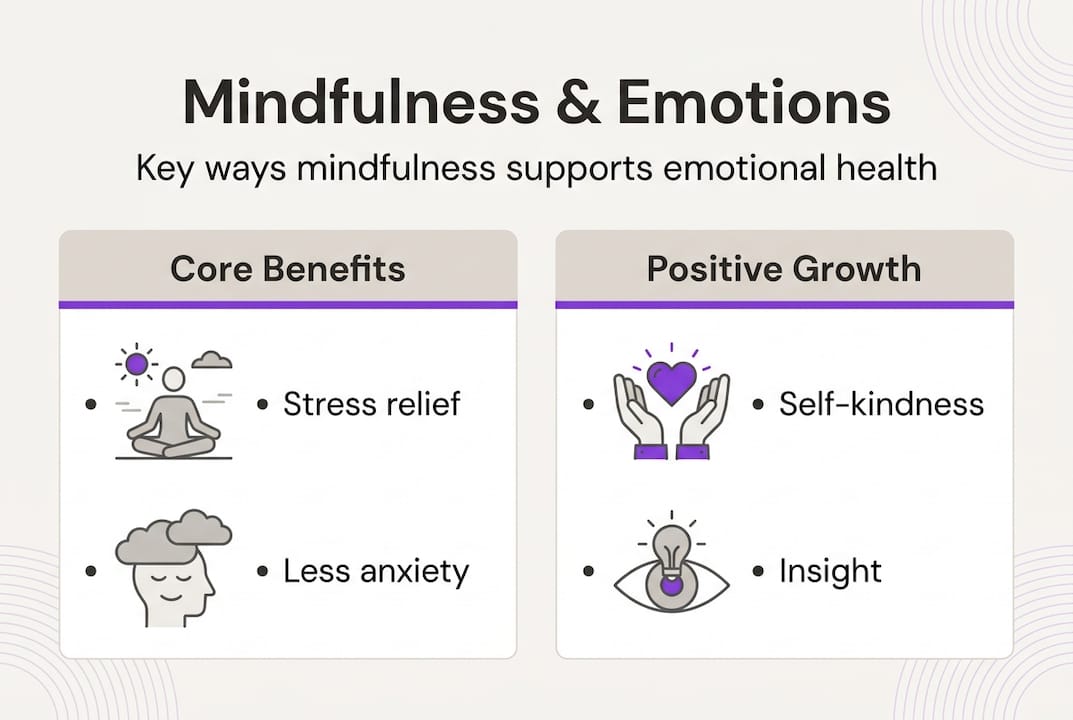
Beyond symptom reduction, mindfulness cultivates positive emotional qualities that support long-term well-being. Research demonstrates that regular practice improves self-compassion and interoception in both adolescents and adults, helping individuals develop kinder internal dialogues and better awareness of bodily sensations linked to emotions. This enhanced interoceptive sensitivity allows you to catch emotional shifts earlier, before they escalate into overwhelming states.
The benefits extend across multiple dimensions of emotional health:
| Outcome | Effect Size | Clinical Significance |
|---|---|---|
| Perceived stress reduction | -0.48 to -0.93 | Moderate to large improvements in stress management |
| Anxiety symptom decrease | -0.38 to -0.59 | Clinically meaningful reduction in anxiety levels |
| Depression score improvement | -0.53 to -0.73 | Substantial mood elevation comparable to some therapies |
| Self-compassion increase | 0.42 to 0.68 | Notable gains in self-kindness and reduced self-criticism |
| Interoceptive awareness | 0.35 to 0.51 | Better recognition of internal emotional and physical states |
These outcomes emerge through relatively accessible practices. You don't need hours of daily meditation to experience benefits. Studies show that even brief, consistent sessions produce measurable improvements in emotional regulation and stress response. The key lies in regularity rather than duration, making mindfulness practical for people with demanding schedules.
Pro Tip: Start with just five minutes daily rather than attempting lengthy sessions that feel overwhelming. Consistency beats duration for building sustainable habits and seeing results. Set a specific time each day to anchor your practice, whether morning coffee or before bed, creating automatic triggers that support adherence.
The relationship between mindfulness and emotional well-being operates through multiple pathways. Enhanced self-exploration allows you to understand your emotional patterns more clearly, while improved self-compassion reduces the secondary suffering that comes from harsh self-judgment. When combined with other mental wellness strategies, mindfulness becomes part of a comprehensive approach to emotional health rather than a standalone solution.
Practical mindfulness techniques for daily emotional wellness
Effective mindfulness practice combines two core components: attention monitoring and experiential acceptance. Research shows that combining these methods yields larger benefits than using either approach alone, as they work synergistically to enhance emotional regulation. Attention monitoring involves deliberately directing awareness to present-moment experiences, while acceptance means observing those experiences without judgment or attempts to change them.
Here are evidence-based techniques you can implement immediately:
-
Body scan meditation: Systematically move attention through different body regions, noticing sensations without trying to alter them. Start at your toes and gradually progress upward, spending 30 seconds on each area. This practice strengthens interoceptive awareness and helps you detect emotional shifts through physical cues.
-
One-minute breath awareness: Brief breathing exercises provide accessible entry points for busy schedules. Focus solely on the sensation of breath entering and leaving your nostrils for 60 seconds. When your mind wanders, gently return attention to the breath without self-criticism.
-
Mindful observation: Choose an object and examine it with complete attention for two minutes. Notice colors, textures, shapes, and details you normally overlook. This trains sustained attention while demonstrating how much richness exists in ordinary moments.
-
Emotion labeling practice: When difficult feelings arise, pause and mentally name the emotion with precision. Instead of generic "bad," identify "frustrated," "disappointed," or "anxious." This simple act of labeling activates prefrontal regions that help regulate emotional intensity.
-
Walking meditation: Move slowly and deliberately, paying attention to the sensation of each footstep. Notice weight shifting, muscles engaging, and ground contact. This combines physical movement with mindful awareness, making it ideal for people who struggle with seated meditation.
Pro Tip: Link mindfulness practices to existing daily routines rather than treating them as separate activities. Practice breath awareness while waiting for coffee to brew, do body scans during your commute, or use mindful observation during meals. These micro-practices accumulate substantial benefits without requiring schedule changes.
"The most effective mindfulness approach combines attention training with acceptance of present-moment experience, creating a powerful foundation for emotional regulation and psychological flexibility."
Integrating mindfulness with guided journaling creates a powerful combination for emotional growth. After meditation sessions, spend a few minutes writing about insights, patterns, or emotions that surfaced. This reflective component helps consolidate learning and reveals connections you might otherwise miss. The combination supports both immediate emotional regulation through mindfulness and deeper understanding through written exploration.

For maximum impact on emotional regulation, try journaling techniques specifically designed to process difficult emotions. Write about challenging experiences using both descriptive detail and emotional awareness, then reflect on how mindfulness practices helped you navigate those situations. This integration reinforces new neural pathways while building confidence in your emotional capabilities.
Nuances, limitations, and integrating mindfulness with personal growth
Despite substantial benefits, mindfulness isn't universally effective and can actually worsen symptoms for some individuals. Research indicates that up to 25% experience adverse effects including increased anxiety, heightened existential distress, or uncomfortable confrontations with suppressed emotions. These reactions often occur when people use mindfulness to avoid difficult feelings rather than genuinely accepting them, or when underlying mental health conditions require more comprehensive treatment.
Mindfulness shows particular limitations with existential anxiety, the deep unease about life's meaning and mortality. While helpful for managing everyday stress, basic mindfulness practices may intensify existential concerns by increasing awareness without providing frameworks for addressing fundamental questions about purpose and meaning. This doesn't invalidate mindfulness but highlights the importance of matching interventions to specific emotional challenges.
| Situation | Mindfulness Effectiveness | Additional Support Needed |
|---|---|---|
| Daily stress and minor anxiety | High effectiveness | Minimal, practice alone often sufficient |
| Moderate depression or anxiety | Moderate effectiveness | Consider combining with therapy or medication |
| Trauma-related symptoms | Variable, sometimes harmful | Requires trauma-informed professional guidance |
| Existential anxiety | Limited effectiveness | Philosophical frameworks, meaning-focused therapy |
| Severe mental health conditions | Insufficient alone | Professional treatment essential, mindfulness as adjunct |
Recognizing these limitations helps you approach mindfulness realistically. If you notice increased distress, racing thoughts, or emotional overwhelm during or after practice, these are signals to adjust your approach or seek professional guidance. Mindfulness should feel challenging at times but never consistently destabilizing.
Integrating mindfulness with complementary practices significantly enhances outcomes. Studies show that combining mindfulness with reflective journaling like Reflective Mindfulness-based Emotional Regulation Training (RMERT) boosts self-awareness and cognitive reappraisal beyond what either practice achieves independently. The journaling component provides structured space to process insights from meditation, track emotional patterns over time, and develop personalized strategies for challenging situations.
Key considerations for effective mindfulness practice:
- Start gradually and monitor your emotional response rather than forcing intensive practice
- Recognize that discomfort differs from harm; some unease is normal as you develop new awareness
- Seek trauma-informed instruction if you have significant trauma history
- Combine mindfulness with therapy for diagnosed mental health conditions
- Use journaling to deepen insights and track what works for your unique needs
Pro Tip: Keep a brief practice log noting duration, technique used, and emotional state before and after sessions. This data reveals patterns about which approaches work best for you and helps identify any adverse reactions early. Review your log weekly to adjust your practice based on actual results rather than assumptions.
Developing personal insight through combined approaches allows you to understand not just what you feel but why certain patterns persist and how to shift them effectively. This deeper self-knowledge supports the emotional resilience needed to navigate life's inevitable challenges with greater ease and confidence. Mindfulness becomes most powerful when integrated into a broader personal growth framework rather than treated as an isolated technique.
Explore personalized emotional wellness with Voisley
Translating mindfulness insights into lasting emotional growth requires the right tools and support. Voisley combines science-backed mindfulness principles with guided journaling, mood tracking, and AI-powered insights to help you understand your emotional patterns and develop personalized wellness strategies. The platform offers structured prompts for different emotional needs, from gratitude practices to shadow work, making it simple to integrate reflection with your mindfulness routine.

Whether you're just beginning your emotional wellness journey or looking to deepen existing practices, Voisley provides the framework to turn awareness into action. The combination of mindful observation and reflective writing creates powerful synergies, helping you process complex emotions, recognize patterns, and build the self-compassion that supports lasting change. Explore how personalized tools can enhance your path to emotional clarity and resilience.
Frequently asked questions
How long does it take to see emotional benefits from mindfulness?
Many people experience noticeable stress reduction within two to four weeks of consistent daily practice, though individual timelines vary significantly. Durable changes in emotional regulation patterns typically emerge after eight to twelve weeks of regular practice, as this allows sufficient time for neuroplastic changes to consolidate. Combining mindfulness with self-reflection through journaling can accelerate insight development and help you recognize subtle shifts earlier. Monitor your own response rather than comparing to others, as factors like baseline stress levels, practice consistency, and technique selection all influence outcomes.
Can mindfulness replace traditional therapy for emotional issues?
Mindfulness serves as a valuable complement to therapy but cannot replace professional mental health treatment for diagnosed conditions like major depression, anxiety disorders, or trauma-related symptoms. While mindfulness-based interventions show effectiveness for mild to moderate symptoms, severe mental health challenges require comprehensive care including therapy, and sometimes medication. Think of mindfulness as one tool in your emotional wellness toolkit rather than a complete solution. Consult qualified mental health professionals to develop personalized treatment plans that may incorporate mindfulness alongside other evidence-based interventions.
What are some signs mindfulness may not be right for me?
Increased anxiety, persistent racing thoughts, worsening mood, or heightened existential distress during or after practice can indicate adverse reactions requiring attention. Some people experience uncomfortable confrontations with suppressed emotions or trauma memories that need professional support to process safely. Dissociation, feeling disconnected from your body, or emotional numbness are additional warning signs. If you notice these symptoms consistently, discontinue your current practice and consult a mental health professional familiar with mindfulness-related adverse effects. They can help determine whether modifications, trauma-informed approaches, or alternative interventions better suit your needs.
How can journaling enhance my mindfulness practice?
Journaling provides structured space to process and consolidate insights that emerge during meditation, transforming fleeting awareness into lasting understanding. Writing after mindfulness sessions helps identify emotional patterns, track progress over time, and develop cognitive reappraisal skills that support emotional regulation. The reflective component allows you to explore questions or feelings that surfaced during practice, creating deeper self-knowledge than meditation alone typically provides. Guided journaling processes offer frameworks for translating mindful awareness into actionable personal growth strategies, making the combination particularly powerful for emotional wellness.