

Many people think emotional resilience means toughing it out or bouncing back quickly after setbacks. That’s only part of the story. True resilience involves adapting to stress while maintaining your mental health and growing from challenges. It’s not about suppressing emotions or pretending everything is fine. Building emotional resilience protects your well-being, enhances relationships, and supports meaningful personal growth. This guide explains what resilience actually is, the psychological mechanisms that make it work, and evidence-based practices like journaling and mindfulness you can use to develop it. You’ll also learn to recognize when resilience efforts become harmful, helping you avoid toxic positivity and burnout.
Table of Contents
-
Practical methods to build emotional resilience: mindfulness, journaling, and regulation
-
Explore Voisley tools to support your emotional resilience journey
Key Takeaways
| Point | Details |
|---|---|
| Resilience is trainable | Resilience is trainable and fluctuates with circumstances. |
| Mindfulness and journaling | Mindfulness and journaling significantly boost resilience and reduce stress. |
| Positive appraisal and reappraisal | Positive appraisal and reappraisal help shift interpretation and emotional response to stress. |
| Cognitive flexibility and acceptance | Flexibility in thinking and accepting emotions prevent rumination and support adaptive coping. |
Understanding emotional resilience and its importance
Emotional resilience is your ability to maintain mental health and adapt effectively when facing adversity, trauma, or significant stress. It’s not a fixed personality trait you either have or don’t have. Research shows resilience fluctuates day-to-day based on circumstances, mood, and energy levels. Think of it as a skill you can strengthen rather than an inherent quality.
Why does this matter? High emotional resilience correlates with lower psychological distress, better physical health, and higher employment rates. A recent study tracking over 3,000 participants found that people with strong resilience scores experienced fewer mental health episodes and recovered faster when challenges arose. The average resilience score on the Brief Resilience Scale sits around 3.6 out of 5, meaning most people have moderate resilience with room to grow.
The benefits extend beyond mental health. Resilient individuals report better cardiovascular health, stronger immune function, and more satisfying relationships. At work, they handle pressure more effectively and maintain productivity during stressful periods. This isn’t about becoming invincible or never feeling upset. It’s about developing the capacity to process difficult emotions constructively and adapt your responses based on what each situation requires.
“Resilience is not about avoiding stress or hardship, but about developing the psychological flexibility to respond adaptively while maintaining well-being.”
Integrating mindfulness practices into your routine supports this adaptive capacity by building present-moment awareness. When you understand that resilience is trainable and multidimensional, you can approach your personal growth with realistic expectations and effective strategies.
Key mechanisms behind emotional resilience
Several psychological processes work together to create emotional resilience. Understanding these mechanisms helps you target your development efforts effectively.
Positive appraisal style means how you interpret challenges. Instead of viewing setbacks as catastrophic failures, you see them as temporary obstacles or learning opportunities. This doesn’t mean ignoring real problems or forcing fake optimism. It means recognizing that your interpretation of events shapes your emotional response and that you can adjust this interpretation consciously.
Reappraisal strategies strongly mediate resilience interventions. Reappraisal involves changing how you think about a stressful situation to alter its emotional impact. For example, reframing a difficult conversation as a chance to clarify misunderstandings rather than a confrontation. Studies show reappraisal produces more lasting resilience benefits than distraction-based coping, which only temporarily shifts your attention away from stress.
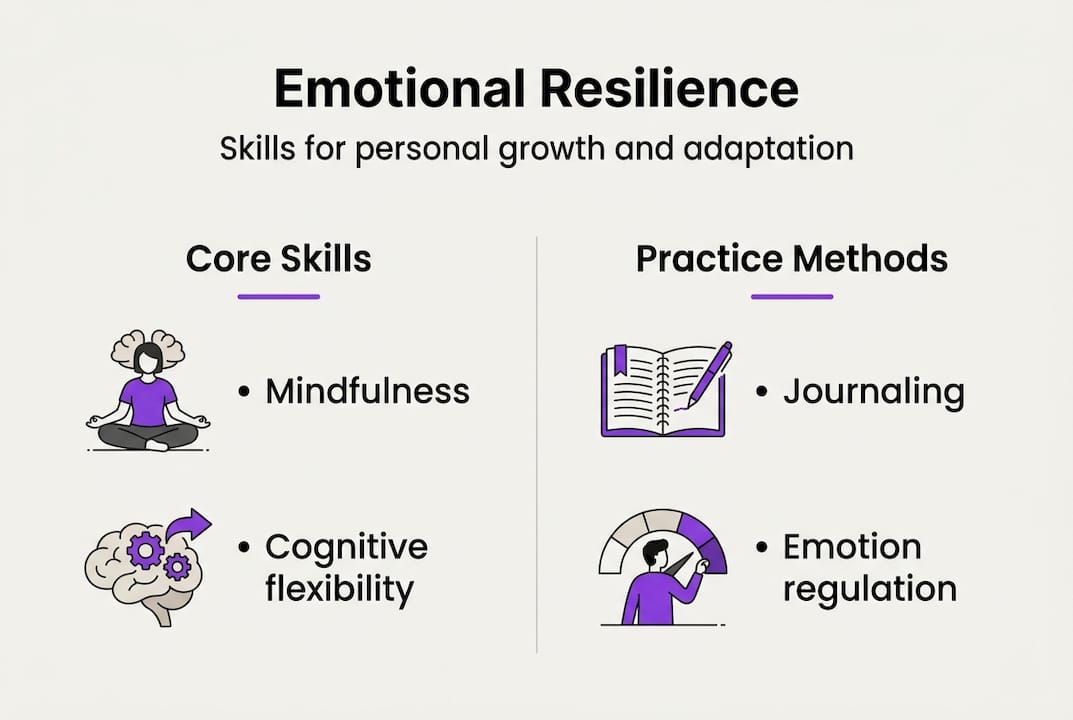
Cognitive flexibility allows you to adapt your thinking and behavior when circumstances change. If one approach isn’t working, you can pivot to try something different rather than rigidly sticking to ineffective patterns. This flexibility prevents you from getting stuck in rumination or helplessness when facing obstacles.

Acceptance means acknowledging your emotions and circumstances without judgment or immediate attempts to change them. This doesn’t mean resignation. It means recognizing what you’re feeling and what’s happening so you can respond thoughtfully rather than reactively. Acceptance creates space for emotional regulation impact relationships by preventing emotional suppression or explosive reactions.
These mechanisms are trainable through specific interventions:
-
Cognitive-behavioral techniques teach reappraisal and positive appraisal styles
-
Mindfulness meditation builds acceptance and present-moment awareness
-
Journaling exercises develop cognitive flexibility and emotional processing
-
Exposure to manageable challenges strengthens adaptive responses
Pro Tip: Practice reappraisal with small daily frustrations before applying it to major stressors. When stuck in traffic, try reframing it as unexpected time to listen to a podcast or practice breathing exercises. This builds the neural pathways that support reappraisal during bigger challenges.
You can regulate your emotions with mindfulness by consistently practicing these mechanisms. The key is understanding that resilience isn’t one skill but a collection of complementary processes you can develop systematically.
Practical methods to build emotional resilience: mindfulness, journaling, and regulation
Now let’s translate theory into action. These evidence-based practices help you develop the mechanisms we just discussed.
Mindfulness exercises anchor you in the present moment and reduce emotional reactivity:
-
Breathing exercises: Spend 5 minutes focusing on your breath, counting four counts in, hold for four, exhale for six. This activates your parasympathetic nervous system and calms stress responses.
-
Body scans: Systematically notice sensations in each body part from toes to head. This builds awareness of how emotions manifest physically, helping you catch stress early.
-
Grounding techniques: When overwhelmed, name five things you see, four you hear, three you touch, two you smell, one you taste. This interrupts anxiety spirals by redirecting attention to sensory input.
Journaling provides structured emotional processing and cognitive restructuring. Mindfulness combined with journaling reduces stress by 43%, and gratitude journaling alone increases happiness by 25%. Different journaling styles serve different purposes:
| Journaling Type | Primary Benefit | Best For |
|---|---|---|
| Gratitude journaling | Shifts focus to positive experiences, increases happiness by 25% | Building optimistic perspective |
| Reflective journaling | Processes complex emotions, identifies patterns | Understanding emotional triggers |
| CBT-based journaling | Challenges negative thoughts, develops reappraisal skills | Restructuring unhelpful thinking |
| Future-focused journaling | Clarifies goals, builds sense of agency | Creating direction during uncertainty |
Emotional regulation techniques help you manage intense feelings constructively. Reappraisal is particularly powerful. When you notice a strong emotional reaction, pause and ask: “What’s another way to interpret this situation? What would I tell a friend experiencing this?” This creates distance from automatic reactions and opens space for more adaptive responses.
Pro Tip: Start with just one practice and build consistency before adding more. Five minutes of daily journaling beats sporadic hour-long sessions. Your brain builds resilience through repetition, not intensity.
Integrating these practices into your routine doesn’t require massive time commitments. Morning pages of stream-of-consciousness writing take 10 minutes. A midday breathing break takes 3 minutes. Evening gratitude reflection takes 5 minutes. The compound effect of small, consistent practices creates significant resilience gains over time. You’re building resilience 7 practical steps everyday life through sustainable habits rather than overwhelming overhauls.
Remember that building resilience means processing emotions, not suppressing them. If journaling brings up difficult feelings, that’s the practice working. You’re creating space to examine and understand those emotions rather than pushing them down. When dealing with difficult emotions, the goal is awareness and acceptance first, then adaptive response.
Recognizing limits and avoiding toxic resilience
Resilience has a shadow side you need to understand. Excessive pressure to bounce back can backfire, creating what psychologists call toxic resilience.
Excessive pressure to bounce back can lead to toxic resilience, burnout, and guilt. This happens when you internalize the message that you should handle everything perfectly, never struggle, or always stay positive. You start viewing normal emotional responses to genuinely difficult situations as personal failures. This mindset causes you to suppress legitimate feelings, ignore your needs, and push through stress until you break.
Resilience is dynamic and context-dependent. Your capacity varies based on your mental health status, available support, recent stress load, and current circumstances. Someone managing depression or recovering from trauma naturally has less resilience bandwidth than someone in a stable period. That’s not a character flaw. Expecting the same resilience level regardless of context sets you up for failure and self-blame.
Signs you might be experiencing toxic resilience:
-
Feeling guilty or ashamed when you struggle emotionally
-
Dismissing your own difficulties because others have it worse
-
Pushing through exhaustion without rest because you should be stronger
-
Emotional numbness or disconnection from feelings
-
Ignoring systemic problems by focusing only on personal coping
-
Viewing asking for help as weakness
Healthy resilience acknowledges limits and seeks support when needed. It recognizes that some situations require changing external circumstances, not just adjusting your internal response. Sometimes the most resilient choice is setting boundaries, taking a break, or advocating for systemic change rather than endlessly adapting to harmful conditions.
| Healthy Resilience | Toxic Resilience |
|---|---|
| Processes emotions constructively | Suppresses or denies difficult feelings |
| Seeks support when overwhelmed | Views needing help as personal failure |
| Recognizes systemic factors affecting well-being | Blames self for all struggles |
| Balances coping with rest and recovery | Pushes through exhaustion constantly |
| Adapts responses while honoring needs | Ignores needs to meet external demands |
Social support networks significantly influence your resilience capacity. Research consistently shows that connection buffers stress and accelerates recovery from adversity. Resilience isn’t purely individual. Your community, relationships, and systemic resources all contribute. When you’re 7 personal development steps build emotional resilience, remember that reaching out strengthens rather than undermines your resilience.
“True resilience includes knowing when to rest, when to ask for help, and when to recognize that the problem isn’t your response but the situation itself.”
Balance is essential. Use resilience-building practices to enhance your capacity while also acknowledging when circumstances need to change, when you need support, or when taking a break is the wisest choice. Resilience means adapting effectively, and sometimes that adaptation involves changing your environment or seeking help rather than just changing your mindset.
Explore Voisley tools to support your emotional resilience journey
Building emotional resilience becomes easier with the right support tools. Voisley offers a comprehensive platform designed specifically to help you develop the practices we’ve discussed throughout this guide.
The app combines mood tracking with guided journaling, giving you structured ways to process emotions and identify patterns over time. You can explore different journaling types like gratitude, reflective, and future-focused entries, all with AI-powered prompts tailored to your emotional state. The mindfulness features include breathing exercises and reflection tools that build present-moment awareness.
What makes Voisley particularly valuable is how it visualizes your emotional trends, helping you see connections between circumstances, thoughts, and feelings. This insight supports the cognitive flexibility and self-awareness that form resilience’s foundation. The platform creates a private space for honest self-reflection while offering community features when you want connection and shared experiences.
Turn your mood into action by exploring tools that make resilience-building practices consistent and accessible. Whether you’re just starting your emotional well-being journey or looking to deepen existing practices, having digital support helps you maintain the regular engagement that builds lasting resilience.
FAQ
How does journaling specifically boost emotional resilience?
Journaling fosters self-awareness by helping you identify emotional patterns and triggers you might otherwise miss. It provides cognitive restructuring opportunities as you examine and reframe unhelpful thoughts on paper. Research shows gratitude journaling increases happiness by 25% while reflective journaling reduces stress by creating space to process rather than suppress difficult emotions. The act of writing externalizes your internal experience, making it easier to gain perspective and develop adaptive responses.
Can mindfulness alone develop emotional resilience effectively?
Mindfulness builds crucial foundations like present-moment awareness and reduced reactivity, but it’s most effective when combined with other practices. While mindfulness enhances your ability to notice emotions without being overwhelmed, journaling helps you process those emotions and reappraisal techniques help you respond adaptively. Research shows the strongest resilience gains come from integrated approaches that combine mindfulness with cognitive and emotional regulation strategies. Think of mindfulness as one essential component in a comprehensive resilience toolkit.
What are signs I might be experiencing toxic resilience?
Watch for feeling guilty when you struggle emotionally or dismissing your difficulties because others have bigger problems. Emotional numbness, chronic exhaustion despite rest, or viewing requests for help as personal weakness all signal toxic resilience. You might notice yourself ignoring systemic stress factors and blaming yourself entirely for not coping better. If you’re pushing through exhaustion constantly or feeling ashamed of normal emotional responses to genuinely difficult situations, you’ve likely crossed from healthy resilience into harmful territory. Recognizing these patterns helps you adjust your approach and seek appropriate support.
How long does it take to build emotional resilience?
Resilience develops gradually through consistent practice rather than quick fixes. Most people notice initial improvements in stress management within 3-4 weeks of regular mindfulness or journaling practice. Deeper changes to cognitive patterns and emotional regulation typically emerge over 2-3 months of sustained effort. Remember that resilience fluctuates based on circumstances and current stress load. The goal isn’t reaching a fixed endpoint but developing ongoing practices that support your adaptive capacity. Small daily actions compound into significant resilience gains over time, so focus on sustainable habits rather than dramatic transformations.