

TL;DR:
- Journaling and mindfulness together build lasting emotional resilience through consistent practice.
- Regular emotional self-care reduces stress, improves mood, and strengthens relationships over time.
- Consistency, not perfection, is key; even brief daily practices lead to meaningful emotional growth.
You know that feeling when emotions pile up faster than you can process them, and no amount of deep breathing seems to help? Millions of people struggle to find reliable, science-backed routines for emotional self-care, cycling through quick fixes that fade within days. The good news is that two well-researched tools, journaling and mindfulness, work together to build lasting emotional resilience. This guide walks you through exactly how to use both, with practical steps, real strategies, and evidence behind every recommendation. Whether you are brand new to self-care or looking to strengthen an existing practice, you will find a clear path forward here.
Table of Contents
- Why emotional self-care matters
- Journaling for self-care: Getting started
- Integrating mindfulness into your routine
- Troubleshooting common obstacles
- Tracking your growth and results
- What most guides miss about emotional self-care
- Ready to deepen your emotional self-care journey?
- Frequently asked questions
Key Takeaways
| Point | Details |
|---|---|
| Consistency is key | Sticking with emotional self-care routines, even imperfectly, drives lasting growth. |
| Combine methods | Pairing journaling with mindfulness gives stronger results than either alone. |
| Progress is visible | Tracking feelings and thoughts helps you recognize improvement over time. |
| Start small | Small, daily habits are easier to maintain and lead to bigger change. |
Why emotional self-care matters
Emotional self-care means actively tending to your inner life. It is the practice of recognizing your feelings, processing them in healthy ways, and building habits that protect your mental well-being over time. It is not a luxury or a weekend activity. It is a foundational skill.
The science is clear. Mindfulness-based interventions reduce anxiety, depression, and stress symptoms with long-term efficacy comparable to traditional therapies. On a neurological level, regular mindfulness practice reshapes how your brain handles difficult emotions. Research shows that MBIs reduce emotional dysregulation, improving neurological and emotional function even in younger populations.
Here is a quick look at what consistent emotional self-care actually delivers:
- Reduced stress and anxiety through regulated nervous system responses
- Improved mood stability by building awareness of emotional triggers
- Stronger relationships because you respond rather than react
- Greater self-compassion which buffers against burnout and self-criticism
- Better sleep quality linked to lower rumination before bed
| Benefit | Short-term effect | Long-term effect |
|---|---|---|
| Stress reduction | Calmer daily reactions | Lower baseline anxiety |
| Emotional awareness | Recognizing triggers faster | Healthier coping patterns |
| Self-compassion | Less harsh self-judgment | Stronger mental resilience |
| Focus and clarity | Reduced mental clutter | Improved decision-making |
Understanding emotional well-being mindfulness practices helps you see why this work compounds over time. Small, consistent efforts add up to meaningful change in how you experience your own life.
Now that you know why emotional self-care is essential, let's look at how to prepare for building your own routine.
Journaling for self-care: Getting started
Journaling is one of the most accessible emotional self-care tools available, and research backs it up. Positive self-talk journaling improves psychological well-being significantly compared to control groups in clinical studies. The act of putting words to feelings creates distance between you and your emotions, making them easier to understand and manage.
Before you start, it helps to know which style fits you best.
| Style | Best for | Format |
|---|---|---|
| Guided journaling | Beginners, structured thinkers | Prompts and questions |
| Free-form journaling | Creative types, emotional release | Open writing, no rules |
| Gratitude journaling | Building positive mindset | Daily lists or reflections |
| Shadow work journaling | Deep self-exploration | Targeted introspective prompts |
Exploring journaling for emotional well-being can help you identify which approach resonates most with where you are right now.
Here is how to get started in five practical steps:
- Choose your medium. Decide between a physical notebook or a digital app. Neither is better. Pick what you will actually use.
- Set a time. Morning journaling helps set intentions. Evening journaling helps process the day. Pick one and protect it.
- Start with a single prompt. Try: "What am I feeling right now, and where do I feel it in my body?" One question is enough.
- Write without editing. Resist the urge to correct grammar or sound smart. Raw honesty is the point.
- Review weekly. Look back at what you wrote. Patterns will surprise you.
Different journaling techniques serve different emotional goals, so it is worth experimenting. Some people find that structured prompts help them stay consistent, while others need the freedom of blank pages. You can also explore life journaling techniques to find a format that fits your lifestyle.
Pro Tip: Pair your journaling session with a small ritual, like making tea or lighting a candle, to signal to your brain that it is time to reflect. This simple cue dramatically improves consistency.
Integrating mindfulness into your routine
Mindfulness is the practice of paying deliberate attention to the present moment without judgment. It is not about clearing your mind. It is about noticing what is there without getting swept away by it. That distinction matters because many beginners give up thinking they are doing it wrong.
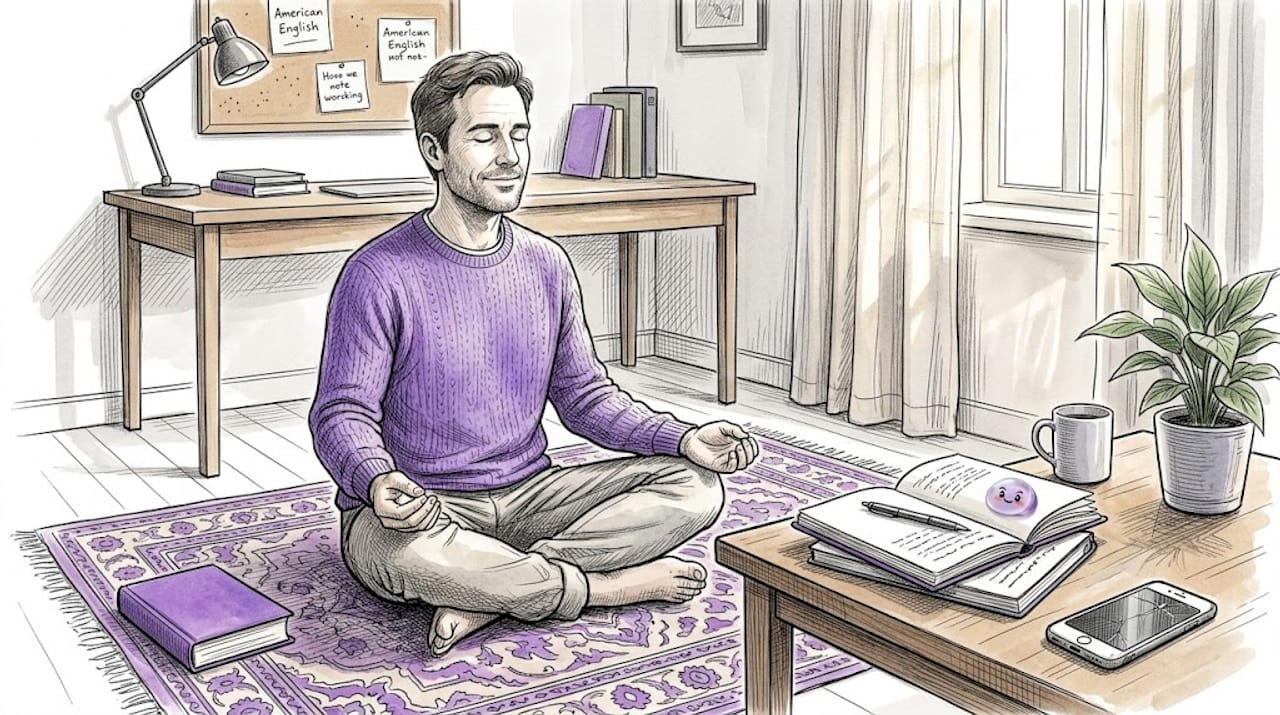
Programs like MBSR (Mindfulness-Based Stress Reduction) and MSC (Mindful Self-Compassion) are well-studied examples. MBSR and MSC help reduce anxiety, depression, and boost self-compassion in measurable ways. You do not need to enroll in a formal program to benefit, though. Simple daily practices work.
Try these beginner-friendly mindfulness exercises:
- Box breathing: Inhale for 4 counts, hold for 4, exhale for 4, hold for 4. Repeat 4 times.
- Body scan: Starting from your feet, slowly move attention up through your body, noticing tension without trying to fix it.
- Mindful observation: Pick any object and study it for two minutes as if you have never seen it before.
- Mindful journaling transition: Before writing, spend 60 seconds breathing slowly to shift from reactive to reflective mode.
"You can't stop the waves, but you can learn to surf." This captures what mindfulness actually teaches: not control, but skilled navigation.
Combining mindfulness with journaling creates a feedback loop. Mindfulness surfaces what you are feeling. Journaling helps you process and understand it. Together, they build the emotional regulation strategies that make hard days more manageable. Learning about the benefits of self-reflection adds another layer of motivation to keep going.
Pro Tip: Short, frequent sessions beat long, occasional ones every time. Five minutes of mindfulness daily does more than a 45-minute session once a week.
Troubleshooting common obstacles
Even with the best intentions, emotional self-care routines break down. Knowing the most common obstacles in advance means you can plan around them instead of giving up.
The three biggest barriers most people face are:
- Lack of motivation: The practice feels pointless before results show up
- Self-judgment: Writing or sitting with feelings triggers shame or discomfort
- Time pressure: Life gets busy and self-care is the first thing dropped
Here is how to work through each one:
- For motivation: Anchor your practice to an existing habit. Journal right after brushing your teeth or meditate before your morning coffee. No new time slot needed.
- For self-judgment: Remind yourself that messy, imperfect journaling is still journaling. There is no wrong way to write your own thoughts.
- For time pressure: Shrink the practice. A two-minute check-in still counts. The goal is the habit, not the duration.
- For blank-page anxiety: Use a single starter sentence like "Today I noticed..." to bypass the freeze.
- For inconsistency: Track your streak visually. A simple calendar with checkmarks creates surprising accountability.
Perfection is the enemy of progress. A two-minute journal entry beats a skipped session every single time.
Consistency in journaling and mindfulness engagement is a key predictor of positive outcomes, regardless of the format used. This means your imperfect, rushed, three-sentence entry still moves the needle. Exploring emotional patterns journaling can also help you see the value in every entry, no matter how brief. If you ever feel stuck, guided journaling for clarity offers structured support to get you moving again.
Tracking your growth and results
One reason people abandon emotional self-care routines is that progress feels invisible. Unlike physical fitness, emotional growth does not show up on a scale. You have to know where to look.
Regular journaling leads to measurable gains in psychological well-being in as little as a few weeks. That is faster than most people expect. The key is having a simple system to notice those gains.
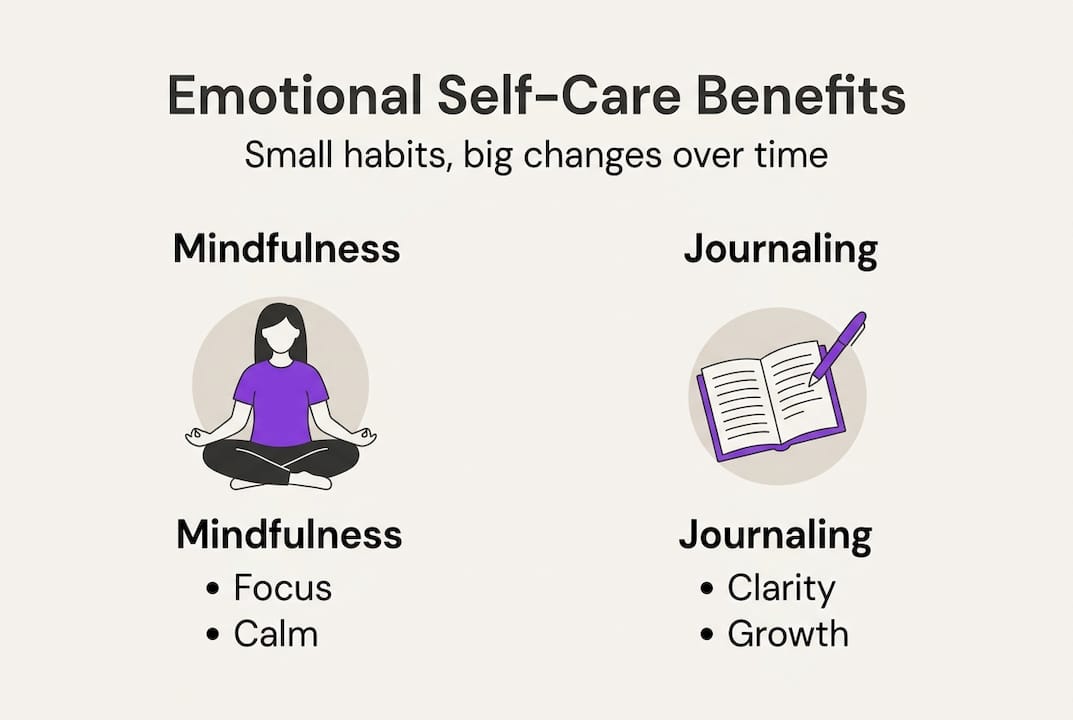
Here is a basic tracking table you can adapt:
| Metric | How to measure | Frequency |
|---|---|---|
| Mood baseline | Rate your mood 1 to 10 each morning | Daily |
| Emotional triggers | Note what upset you and why | As needed |
| Gratitude moments | List 1 to 3 things you appreciated | Daily |
| Mindfulness sessions | Log duration and type | Daily |
| Weekly reflection | Write 3 sentences on how you felt overall | Weekly |
Use these reflection questions to check in with yourself regularly:
- Am I reacting less intensely to situations that used to trigger me?
- Do I notice my emotions earlier, before they escalate?
- Am I sleeping better or feeling less mentally cluttered?
- Do I feel more patient with myself and others?
- Are there emotional patterns I can now name that I could not before?
Celebrate small wins deliberately. Did you journal three days in a row? That matters. Did you catch yourself before reacting in anger? That is growth. Checking out mental wellness journaling tips can help you refine your tracking approach. Understanding introspection and mental health also reveals why this kind of self-monitoring is so powerful for long-term well-being.
What most guides miss about emotional self-care
Most emotional self-care content focuses on finding the right method. The perfect journal. The ideal meditation app. The best morning routine. This focus is well-meaning but misses the point entirely.
The research is unambiguous: habit strength predicts outcomes, not format. A person who writes three messy sentences every night will outperform someone who does a beautiful, structured journaling session once a week. Consistency is the mechanism. Everything else is decoration.
What this means practically is that you should stop optimizing and start showing up. Pick the simplest possible version of your practice and do it every day. Upgrade later. The science-backed regulation literature consistently shows that frequency of engagement, not sophistication, drives emotional improvement.
There is also a deeper truth here. Real emotional growth does not announce itself with dramatic breakthroughs. It shows up in the small moments: pausing before you snap at someone, noticing anxiety without catastrophizing, choosing rest without guilt. Those quiet shifts are the actual results. They only become visible when you have been consistent long enough to compare who you are now to who you were three months ago.
Ready to deepen your emotional self-care journey?
Building a meaningful emotional self-care routine is one of the most valuable investments you can make in your mental health. You now have the framework, the tools, and the troubleshooting strategies to get started and stay consistent.

Voisley brings all of this together in one place. With guided journaling prompts, mood tracking, AI-powered insights, and structured reflection tools, Voisley resources give you the support and structure to make your practice stick. If you want to go deeper, exploring the self-reflection benefits covered on the blog is a great next step. Your emotional well-being deserves more than good intentions. It deserves a real system.
Frequently asked questions
What is emotional self-care and why do I need it?
Emotional self-care means recognizing and managing your feelings in healthy ways, which reduces stress and supports your mental health. Mindfulness-based interventions reduce anxiety, depression, and stress symptoms, making consistent practice a proven path to better emotional health.
Is journaling or mindfulness better for emotional growth?
Both tools reduce emotional distress and improve well-being, but using them together consistently produces the strongest results. Both methods reduce emotional distress and are most effective when practiced as complementary habits rather than alternatives.
How soon can I notice benefits from journaling?
Many people feel improvements in mood and clarity within a few weeks of starting a regular journaling habit. Positive self-talk journaling improves psychological well-being significantly in a short period, especially when practiced consistently.
What if I miss a day of my self-care routine?
Missing a day is completely normal and does not erase your progress. Consistency over time matters far more than any single session, so simply return to your practice the next day without self-judgment.