

TL;DR:
- Mental wellness is distinct from mental illness, involving active emotional strength, relationships, and purpose.
- Building mental wellness involves practices like mindfulness, journaling, and self-reflection for lasting growth.
- Emotional experience includes positive and negative feelings, with resilience developed through embracing the full spectrum.
Mental wellness is not the same as being free of mental illness, and that distinction might be the most important thing you learn today. Many people quietly assume that if they're not struggling with a diagnosis, they must be doing fine. But research tells a more nuanced story: emotional well-being and mental illness sit on two separate tracks, and you can be thriving on one while struggling on the other. This article breaks down what mental wellness actually means, walks through the models researchers use to understand it, and gives you practical tools to build real, lasting emotional clarity.
Table of Contents
- Defining mental wellness: More than just the absence of illness
- Models of mental wellness: From dual continua to holistic frameworks
- The power of mindfulness, journaling, and self-reflection on mental wellness
- Measurement, benchmarks, and cultural context: Understanding your progress
- Why focusing only on happiness shortchanges your mental wellness journey
- Enhance your journey with guided support
- Frequently asked questions
Key Takeaways
| Point | Details |
|---|---|
| Wellness ≠ no illness | Mental wellness goes beyond simply not having a mental illness and has its own dimensions. |
| Holistic models matter | Modern frameworks view well-being and illness as separate but overlapping, not opposites. |
| Practical strategies work | Mindfulness, journaling, and self-reflection are powerful, research-backed tools for mental wellness. |
| Track your progress | Using benchmarks and self-assessment helps you see growth and understand your own mental wellness journey. |
| Growth is deeper than happiness | True mental wellness involves embracing challenges, not just pursuing positive feelings. |
Defining mental wellness: More than just the absence of illness
Here's a belief worth questioning: that mental wellness is simply the opposite of mental illness. It feels logical. But science disagrees.
The American Psychological Association defines mental health as a state characterized by emotional well-being, good behavioral adjustment, relative freedom from anxiety and disabling symptoms, capacity for constructive relationships, and the ability to cope with ordinary stress. Notice what that definition includes: relationships, adaptability, and emotional depth. It's not just a checklist of symptoms you don't have.
"Mental wellness involves not just the absence of distress, but the active presence of emotional strength, connection, and purpose."
This distinction matters enormously in practice. Someone managing bipolar disorder with strong support systems, meaningful work, and consistent self-care can have genuinely high mental wellness. Meanwhile, someone with no clinical diagnosis can feel emotionally hollow, disconnected, and unable to cope with everyday challenges. Both scenarios are real and common.
The dual-continua model of mental health makes this concrete: mental illness and mental well-being are separate dimensions, not opposite ends of the same line. You can score high on both, low on both, or high on one and low on the other. This framework fundamentally changes how we think about emotional health.
What does mental wellness actually look like in daily life? Here are the core components researchers point to:
- Emotional regulation: The ability to notice, name, and work through feelings without being overwhelmed
- Adaptability: Bouncing back from setbacks without losing your sense of self
- Meaningful relationships: Feeling genuinely connected to others, not just socially active
- Purposeful engagement: Doing things that align with your values, not just filling time
- Stress tolerance: Managing pressure without it derailing your functioning
Understanding these principles of emotional health gives you a foundation to build from. And recognizing how emotional wellbeing fuels personal growth shifts your focus from avoiding problems to actively building something stronger.
Models of mental wellness: From dual continua to holistic frameworks
Once you accept that mental wellness is its own dimension, the next question is: how do researchers actually map it? Several frameworks compete for attention, and each one reveals something different.
The dual-continua model is arguably the most research-supported. Empirical factor analyses confirm two separate factors: absence of illness and presence of well-being. These factors don't cancel each other out. They coexist, interact, and influence each other in complex ways. This model is why clinicians increasingly treat well-being as a treatment goal, not just symptom reduction.
The World Health Organization takes a broader view. Rather than focusing on clinical categories, the WHO's holistic wellness definition goes well beyond the absence of disease, framing health as a state of complete physical, mental, and social well-being. That's a high bar, and an inspiring one.
Beyond these institutional frameworks, researchers also debate two philosophical approaches to what wellness actually means:
| Model | Core focus | Strengths | Limitations |
|---|---|---|---|
| Hedonic | Happiness, pleasure, positive emotion | Easy to measure, intuitive | Can miss deeper fulfillment |
| Eudaimonic | Purpose, growth, meaning | Captures long-term flourishing | Harder to quantify |
| Dual-continua | Well-being and illness as separate axes | Nuanced, research-backed | Less familiar to general public |
| WHO holistic | Physical, mental, and social integration | Comprehensive | Broad and hard to operationalize |
The tension between hedonic and eudaimonic models is worth sitting with. Hedonic wellness asks: do you feel good? Eudaimonic wellness asks: are you living well? The first is easier to chase. The second tends to produce more durable results. Staying current with emotional health trends shows that the field is moving steadily toward eudaimonic and integrative models, because happiness alone doesn't predict resilience or long-term functioning.
The takeaway: no single model owns the truth. But together, they paint a picture of mental wellness as something you build, not just something you have.
The power of mindfulness, journaling, and self-reflection on mental wellness
Knowing what mental wellness is gives you direction. Knowing how to build it gives you momentum. Three tools stand out in the research: mindfulness, journaling, and self-reflection.
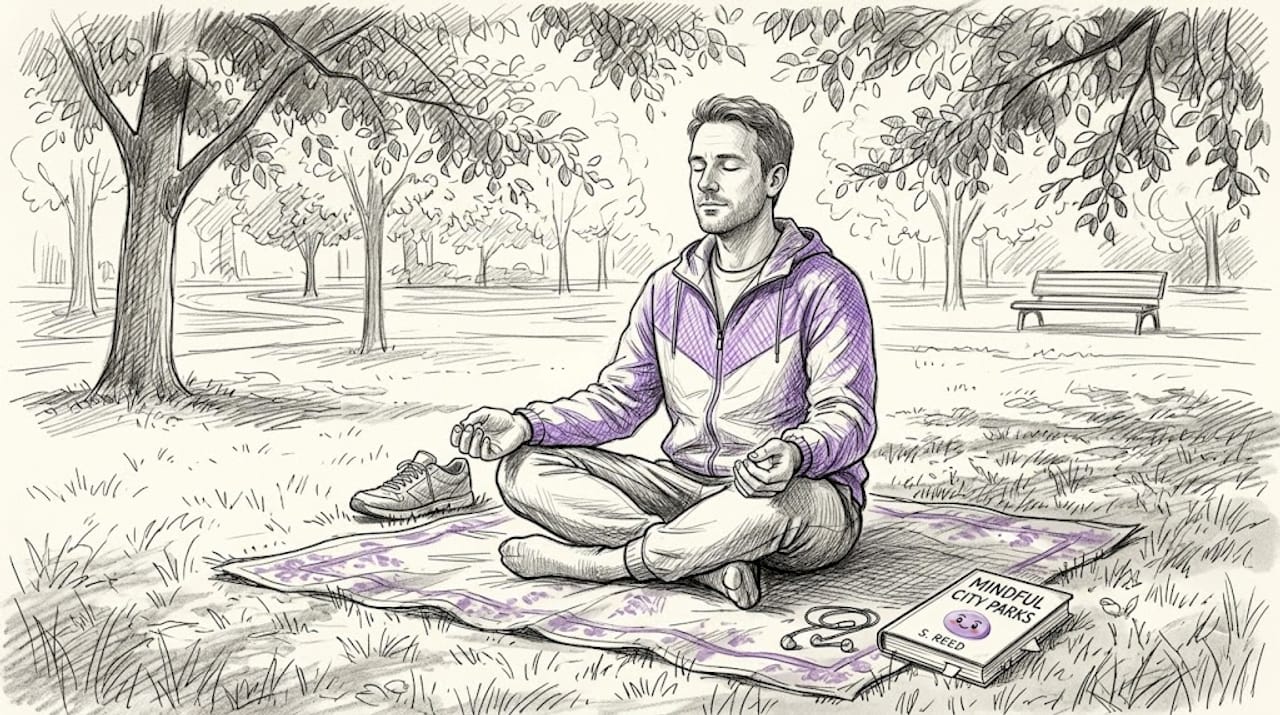
Mindfulness practices train your attention. Instead of being swept along by thoughts and feelings, you learn to observe them. That small shift, from being inside an emotion to watching it, changes how much power it holds over you. It's not about feeling calm all the time. It's about not being hijacked.
Journaling works differently. It gives your internal experience a structure. When you write about what happened and how you felt, you activate the brain's language centers, which naturally reduces emotional intensity. Journaling for emotional well-being is one of the most accessible and evidence-backed practices available, requiring nothing more than time and honesty.
A 12-week mindfulness and journaling intervention showed measurable increases in mindfulness attention, health-related quality of life, and significant reductions in stress and worry. These aren't soft outcomes. They're tracked, measurable shifts.
| Practice | Primary benefit | Time investment | Evidence strength |
|---|---|---|---|
| Mindfulness meditation | Reduces reactivity and stress | 10-20 min/day | Strong |
| Expressive journaling | Processes emotions, builds clarity | 15-30 min/day | Strong |
| Guided self-reflection | Deepens self-awareness | 10-20 min/day | Moderate to strong |
Pro Tip: Start with just five minutes of journaling each morning. Write without editing yourself. The goal isn't good writing. It's honest writing.
Here's a simple way to begin:
- Choose a consistent time. Morning or evening works best for most people.
- Start with a prompt. "What am I feeling right now, and where do I feel it in my body?"
- Write without stopping. Don't correct, judge, or filter.
- Add one mindful breath. Before you close your journal, take one slow breath and notice how you feel.
- Review weekly. Look for patterns in your entries using introspection for mental health as a guide.
Using motivational prompts to boost journaling can also help you push past blank-page resistance and go deeper faster.
Measurement, benchmarks, and cultural context: Understanding your progress
Progress in mental wellness can feel invisible if you don't know what to track. The good news: you don't need a clinical assessment to get useful feedback.
Self-rated mental health (SRMH) is one of the simplest and most validated tools. You simply ask yourself: on a scale from poor to excellent, how would you rate your mental health right now? Research shows this single question predicts meaningful outcomes over time. But context shapes the answer. Self-rated mental health varies significantly across countries, with some African nations reporting higher SRMH than Japan or the UK, partly due to religious attendance, community ties, and cultural frameworks around well-being.
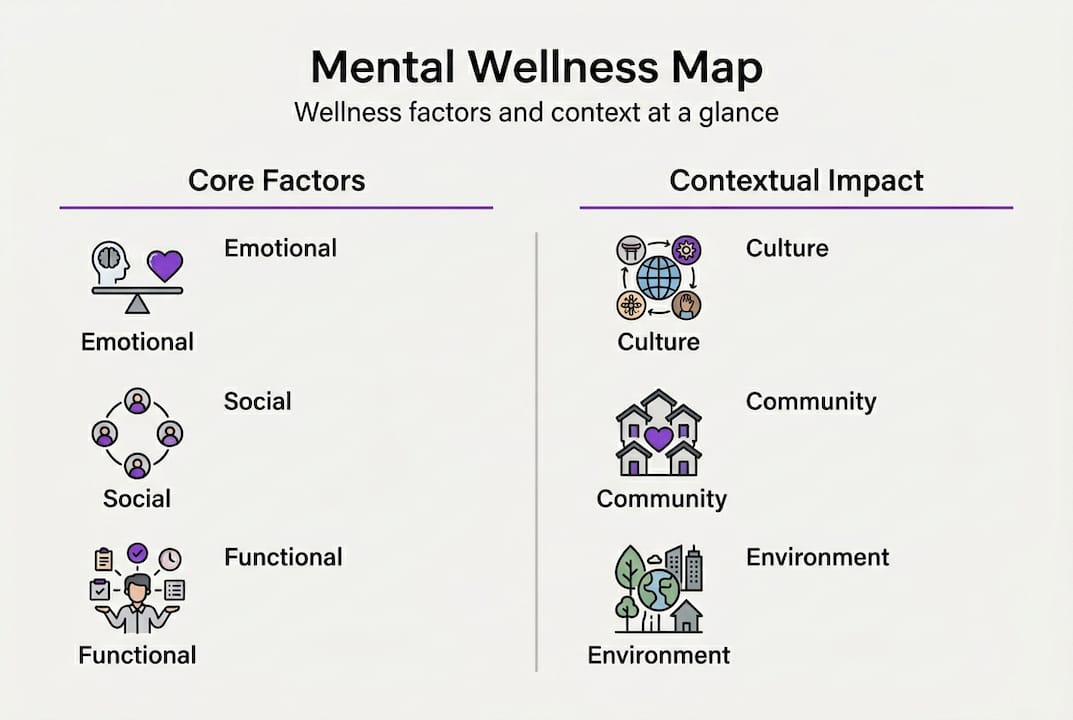
That's not a flaw in the data. It's a reminder that mental wellness doesn't exist in a vacuum. Your community, your cultural background, and your sense of belonging all influence how you experience and report well-being.
For those dealing with depression specifically, the data on digital tools is striking. Digital CBT programs show a depression effect size of d=1.61, compared to 0.63 for traditional psychotherapy, with 92% of users showing reliable improvement. That's a significant gap, and it points to the growing role of structured, tech-enabled support.
And here's a finding that surprises most people: moderate depression can coexist with high life satisfaction, with notable variation across cultures and demographics. Emotional experience is layered, not linear.
Here's how to track your own wellness meaningfully:
- Use a weekly self-rating (1-10) for mood, energy, and connection
- Review your journal entries for recurring themes or emotional patterns
- Notice changes in sleep, appetite, and social engagement as indirect signals
- Explore mental wellness tips and adapt them to your own baseline
Pro Tip: Use a simple mental wellness checklist weekly. Consistency beats perfection. Five minutes of honest reflection every Sunday gives you more insight than a monthly deep-dive.
Pairing self-assessment with emotional regulation techniques gives you both the map and the tools to navigate it.
Why focusing only on happiness shortchanges your mental wellness journey
Here's something the wellness industry rarely says out loud: chasing happiness can actually work against you.
When you treat positive feelings as the goal, negative emotions become the enemy. You avoid them, suppress them, or feel like you're failing when they show up. But emotional avoidance is one of the strongest predictors of poor mental wellness over time. The feelings you push away don't disappear. They compound.
Real mental wellness grows from the full spectrum of experience. Grief, frustration, uncertainty, and discomfort aren't signs that something has gone wrong. They're the raw material of self-awareness. When you sit with a hard feeling in your journal instead of scrolling past it, you're building something that happiness alone can't give you: resilience.
The eudaimonic model gets this right. Emotional wellbeing for personal growth isn't about feeling good every day. It's about developing the capacity to meet your life honestly, including the parts that are difficult. That's the foundation of lasting emotional clarity, not a highlight reel of good moods.
Enhance your journey with guided support
Understanding mental wellness is a powerful first step. Putting it into consistent practice is where the real transformation happens.

Voisley is built for exactly this. Whether you're exploring gratitude journaling, working through shadow work prompts, or tracking your emotional patterns over time, the platform gives you a structured, private space to do it all. AI-powered insights help you spot trends you might miss on your own, and the community features remind you that growth doesn't have to be a solo journey. If you're ready to move from understanding to action, explore guided journaling tools and start building the emotional clarity you're looking for.
Frequently asked questions
Is mental wellness different from mental health?
Yes. Mental wellness focuses on active emotional well-being and life functioning, not just the absence of illness. The dual-continua model shows that well-being and mental illness are separate dimensions that can coexist.
What are practical ways to improve my mental wellness?
Journaling, mindfulness meditation, and self-reflection are all evidence-based methods. A 12-week journaling and mindfulness program measurably increased attention and reduced stress in participants.
Can someone have mental wellness even with a diagnosis like depression?
Yes. Research confirms that moderate depression can coexist with high life satisfaction, with meaningful variation across cultural and demographic groups.
How do you measure mental wellness?
Self-assessment scales, emotional checklists, and consistent journaling all provide useful signals. Self-rated mental health is a validated, simple tool that predicts meaningful outcomes when used regularly.