
TL;DR:
- Emotional strain affects nearly everyone, with high rates of depression, anxiety, and social isolation.
- Body-based practices like breathwork and sensory tools are trending for stress regulation in 2026.
- Sustainable emotional health requires deeper, consistent habits rather than chasing quick fixes.
Emotional strain is no longer a personal struggle hiding in the background. 89% of women, 85% of men, and 98% of gender-diverse individuals are affected by emotional strain in 2026, making this one of the most pressing collective challenges of our time. Whether you're navigating anxiety, disconnection, or the quiet weight of daily stress, you're far from alone. This article breaks down what's driving the surge, maps the most significant emotional health trends reshaping how people cope and thrive, and gives you practical, evidence-backed strategies you can start using today.
Table of Contents
- Understanding the emotional health landscape in 2026
- Top emotional health trends shaping 2026
- How emotion regulation strategies are evolving
- Actionable wellness strategies for emotional health
- Our perspective: Why 2026 emotional health trends defy quick fixes
- Next steps for your emotional well-being
- Frequently asked questions
Key Takeaways
| Point | Details |
|---|---|
| Emotional strain surging | Emotional health challenges are now nearly universal across all demographics in 2026. |
| Trends favor joyful approaches | Practices promoting pleasure, body-based regulation, and nervous system care are outperforming strict tracking or metrics. |
| Innovation drives solutions | AI-integrated care and novel tools like adaptogens and sensory gadgets are making emotional self-care more accessible. |
| Personalization is essential | Choosing strategies that fit your needs—rather than following every trend—leads to sustainable emotional well-being. |
Understanding the emotional health landscape in 2026
The scale of today's emotional health crisis is hard to overstate. Depression symptoms range from 14 to 50%, and anxiety affects 13 to 48% of people globally, with wide variation depending on country, income level, and social context. These aren't just numbers. They represent millions of people who wake up every day carrying invisible weight.
The picture becomes even more complex when you look at gender. Men face a disproportionately high burden in one critical area: men's global suicide rate sits at 12.8 per 100,000, roughly three to four times higher than women in the US. Social isolation and rigid norms around emotional expression push many men toward silence instead of support. Women, on the other hand, report higher rates of emotional suppression and difficulty maintaining meaningful connection, even when surrounded by people.
Here's a snapshot of who is most affected:
- Young adults (18 to 35): Highest rates of anxiety and depression globally
- Gender-diverse individuals: 98% report significant emotional strain
- Men: Higher suicide risk and social isolation, lower rates of help-seeking
- Women: Greater emotional suppression and reported disconnection
- Low-income populations: Fewer resources, higher exposure to compounding stressors
"Well-being is not simply the absence of mental illness. It's a positive state that requires active cultivation, not just symptom management."
This distinction matters enormously. Avoiding depression is not the same as flourishing. Emotional wellbeing for growth requires intentional effort, not just crisis prevention. Understanding where you sit on the spectrum between illness and genuine well-being is the first step toward meaningful change. Keeping up with emotional awareness trends can help you identify where the field is heading and where your own gaps might be.
Top emotional health trends shaping 2026
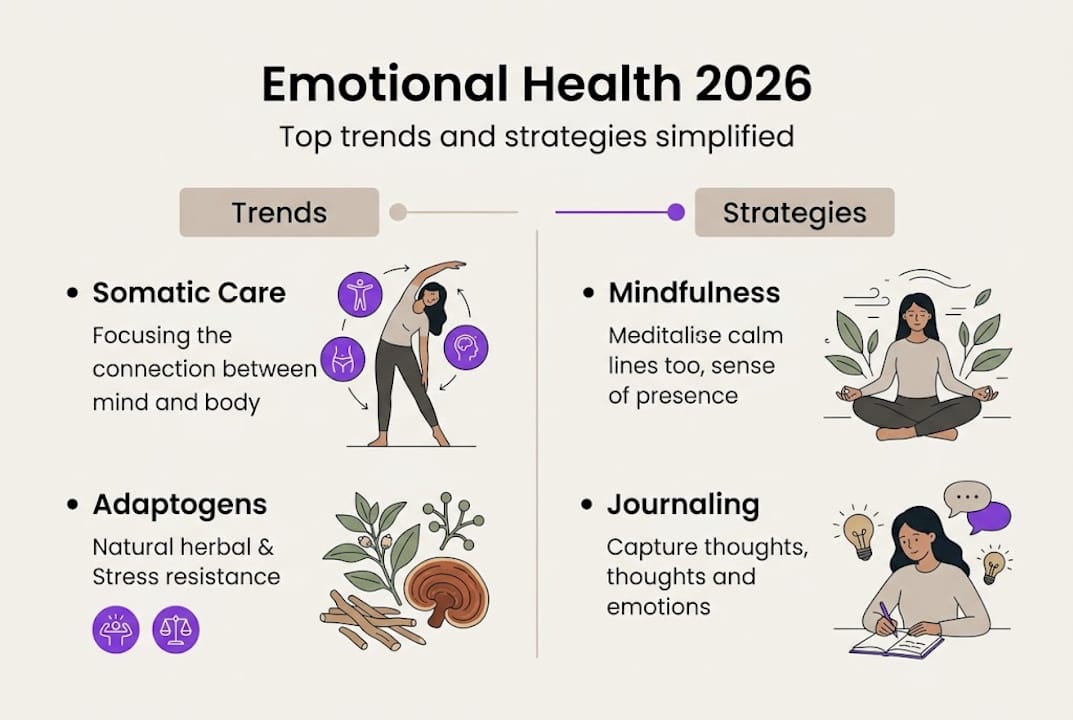
The tools and practices people are turning to in 2026 look very different from five years ago. Search data tells a compelling story: adaptogens and sensory toy searches have surged up to 99 times year over year, signaling a massive shift in public interest toward both ancient remedies and tactile, body-focused tools.
Here's how the most popular trends compare:
| Trend | Type | Best for | Accessibility |
|---|---|---|---|
| Adaptogens | Supplement | Stress and fatigue | Moderate |
| Neuroplasticity practices | Cognitive | Rewiring thought patterns | High |
| Journaling | Reflective | Emotional processing | Very high |
| Breathwork | Somatic | Nervous system reset | Very high |
| Sensory/fidget toys | Tactile | Anxiety and focus | High |
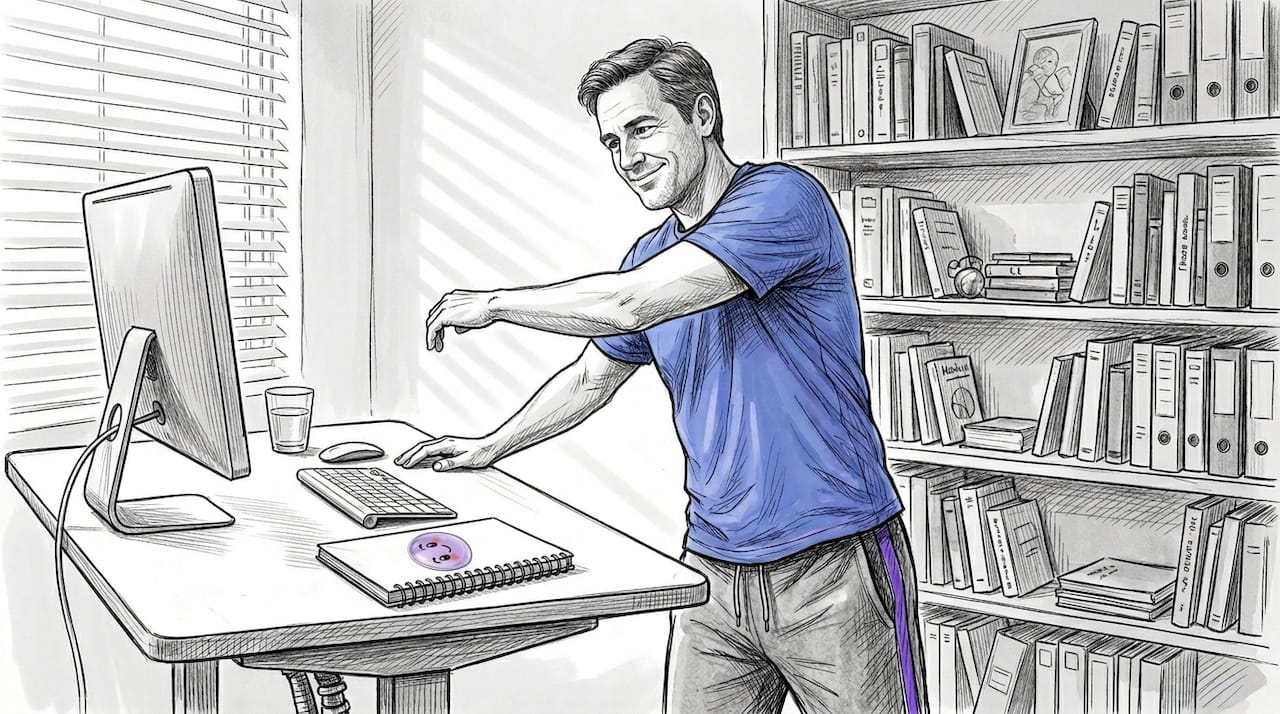
One of the most significant shifts is the move toward body-based approaches. Somatic practices and nervous system regulation are now front and center in wellness conversations, especially as people grapple with stressors like environmental anxiety and information overload. Rather than thinking your way out of stress, these approaches help you feel your way through it.
There's also a growing pushback against relentless self-optimization. More people are choosing joy, pleasure, and rest over tracking every metric. This "anti-optimization" movement isn't laziness. It's a recognition that obsessing over data can itself become a source of anxiety.
Key trends to watch:
- Adaptogens like ashwagandha and rhodiola for stress buffering
- Neuroplasticity exercises including learning new skills and pattern interruption
- Breathwork protocols for quick nervous system downregulation
- Guided journaling for structured emotional processing
- Sensory tools for grounding during overwhelm
Pro Tip: Before chasing every new trend, ask yourself one question: does this tool address your body, your thoughts, or your relationships? Each category serves a different need, and matching the tool to the gap is far more effective than collecting practices.
For a deeper look at how mindfulness for emotional health fits into this picture, or to run through a practical mental wellness checklist, you'll find both worth exploring.
How emotion regulation strategies are evolving
Emotion regulation is the engine underneath all emotional health work. Two strategies dominate the research: reappraisal (actively reframing how you interpret a situation) and acceptance (allowing feelings to exist without fighting them). New neuroscience confirms that reappraisal and acceptance use distinct brain networks, and importantly, these findings hold across cultures, making them universally relevant.
This matters because it means your cultural background doesn't disqualify you from benefiting from either approach. The science is broadly applicable, even if the specific language or framing needs to adapt.
Gender norms still create real barriers. 67% of men report hiding emotions, and 15% say they have no close friends to confide in. Stoicism, often framed as strength, quietly erodes emotional health over time. The research is unambiguous: suppression increases physiological stress, not just psychological discomfort.
Here's a simple three-step process to assess and improve your own regulation approach:
- Identify your default pattern. Do you typically reframe situations, avoid them, suppress feelings, or move through them?
- Track outcomes over two weeks. Note which situations leave you drained versus regulated. Look for patterns.
- Experiment deliberately. If you default to reappraisal, try acceptance for lower-stakes situations and observe the difference.
| Strategy | Best used when | Watch out for |
|---|---|---|
| Reappraisal | Situation is changeable | Becoming dismissive of real pain |
| Acceptance | Situation is fixed | Passive resignation without action |
Pro Tip: Acceptance is not giving up. It's the most efficient path when a situation is genuinely outside your control. Reappraisal burns more cognitive energy and works best when there's real room to change your interpretation.
For a thorough breakdown, explore science-backed emotion regulation or try journaling for emotion regulation as a hands-on starting point.
Actionable wellness strategies for emotional health
Knowing the landscape is one thing. Doing something with that knowledge is another. The gap between awareness and action is where most people get stuck, so let's close it.
First, a critical distinction: tracking well-being, not just illness, is essential for prevention and long-term growth. This means building practices that cultivate positive states, not just managing symptoms when things go wrong.
Three daily actions that build emotional resilience:
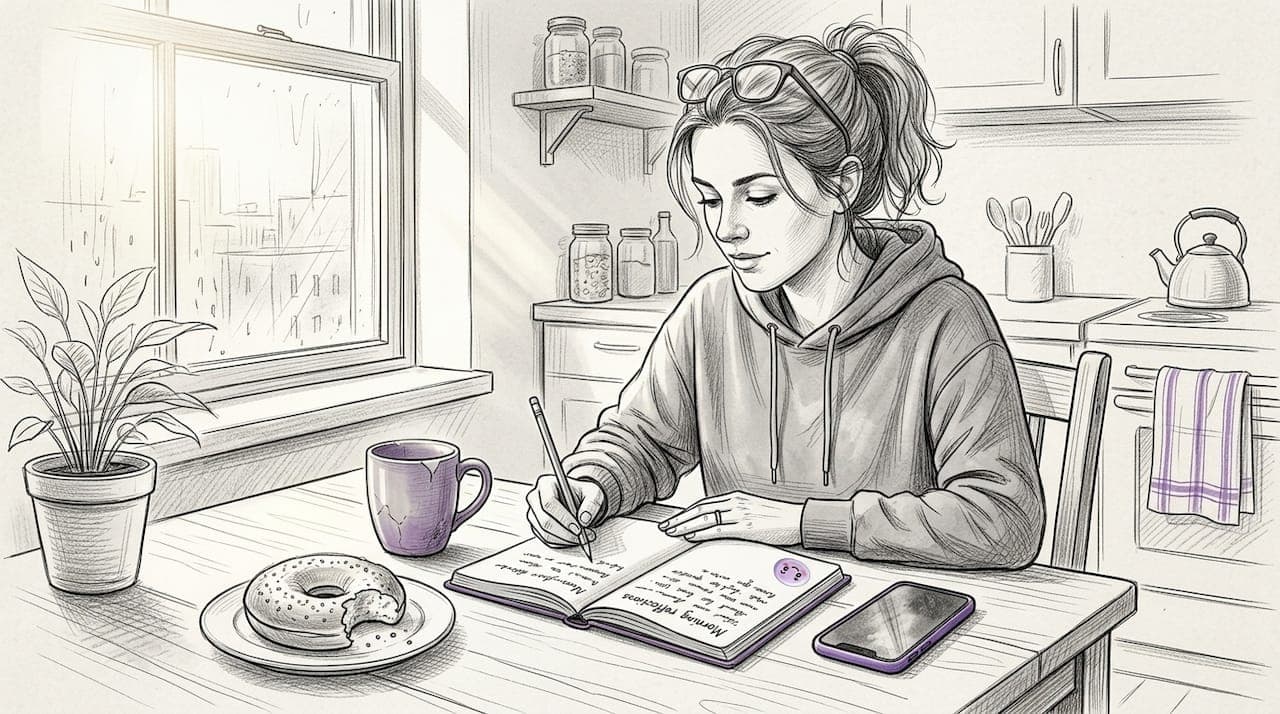
- Morning mood check-in (3 minutes). Before reaching for your phone, name one emotion you're carrying. Just naming it reduces its intensity, a process called affect labeling.
- Mindful breathing reset (5 minutes). A simple 4-7-8 breath pattern (inhale 4 counts, hold 7, exhale 8) activates the parasympathetic nervous system and interrupts the stress response.
- Evening journaling (10 minutes). Reflect on one moment that felt heavy and one that felt good. This dual-entry practice builds both emotional processing and gratitude simultaneously.
On the innovation side, AI-integrated care, neurodivergence support, and disaster resilience are reshaping workplace wellness in 2026. These aren't just corporate trends. They signal a broader cultural shift toward personalized, continuous support rather than one-size-fits-all interventions.
Key strategies to build into your routine:
- Use structured journaling to surface emotional patterns you can't see in real time
- Practice body-based resets before high-stress situations, not just after
- Leverage AI mental wellness tools to identify patterns across weeks, not just days
- Explore guided journaling for well-being to move from vague feelings to clear insights
Pro Tip: Don't wait for a crisis to start tracking your emotional state. A simple weekly rating of energy, connection, and mood across three dimensions gives you early warning signals before things escalate.
Our perspective: Why 2026 emotional health trends defy quick fixes
Here's something most wellness content won't tell you: the explosion of emotional health tools in 2026 can itself become a trap. When every app, supplement, and practice promises transformation, the pressure to optimize your inner life starts to feel like another job. And that pressure is counterproductive.
The over-optimization backlash driving interest in pleasure and nervous system regulation over metrics is not a retreat from growth. It's a correction. Real emotional health isn't built by stacking more practices. It's built by going deeper into fewer ones.
We've seen this pattern repeatedly: people who track everything but feel nothing. The measurement becomes the goal, and the actual experience of feeling better gets lost. Sustainable emotional growth requires tolerating discomfort, not just managing it away. It requires genuine pleasure, not just the absence of pain.
Focus on developing true emotional resilience rather than chasing the next trend. The most durable changes come from consistent, unglamorous practices, not viral breakthroughs.
Next steps for your emotional well-being
If this article has sparked something in you, the best move is to act on it before the feeling fades. Insight without action is just information.

Voisley is built for exactly this moment. Whether you're starting with a simple mood check-in or diving into shadow work and future-goal journaling, the platform gives you a structured, private space to turn awareness into lasting habits. AI-powered insights help you spot emotional patterns across weeks, not just days, so growth compounds over time. Explore emotional wellbeing resources to deepen your foundation, or turn mood into action with Voisley and start building the emotional clarity you've been working toward.
Frequently asked questions
What are the most popular emotional health trends in 2026?
Adaptogens, neuroplasticity, sensory toys, breathwork, and journaling have all seen explosive growth in 2026, with some categories surging 20 to 99 times in search interest year over year. Each serves a different need, so matching the tool to your specific challenge matters most.
Why is emotional strain so high in 2026?
Rising strain connects to economic pressure, social isolation, shifting gender norms, and global instability, creating a perfect storm that touches nearly every demographic. The varied global predictors of depression and anxiety confirm there's no single cause, which is why no single fix works for everyone.
How do gender and culture influence emotional health in 2026?
Men face higher suicide rates and greater social isolation, while women report more emotional suppression and disconnection. Importantly, emotion regulation strategies like acceptance and reappraisal are effective across cultural contexts, even though the way they're expressed varies.
What are the best ways to improve my emotional health in 2026?
Combining journaling, mindful breathing, and body-based practices with AI-guided tools gives the most well-rounded results. Well-being promotion is now recognized as essential for prevention, not just recovery, so building proactive habits matters as much as managing symptoms when they arise.