

TL;DR:
- Digital mental wellness actively uses technology like journaling and mood tracking to promote emotional growth.
- Proven tools like CBT journaling can significantly reduce anxiety and improve self-awareness over weeks.
- Using one well-selected app consistently and offline application enhances emotional insights and overall well-being.
Most people assume digital wellness means putting down your phone more often. That's actually digital wellbeing, a related but separate idea. Digital mental wellness is something more active: it's the intentional use of technology, including guided journaling, mood tracking, and AI-powered self-reflection tools, to build emotional regulation and personal growth. The difference matters because one approach asks you to step back from tech while the other asks you to use it more skillfully. This article breaks down what digital mental wellness really means, how specific tools deliver measurable results, and how to apply these methods safely in your own life.
Table of Contents
- What is digital mental wellness?
- How digital tools support emotional regulation and self-growth
- Digital wellness vs. digital mental health: What's the difference?
- Practical tips for using digital mental wellness safely and effectively
- The real key to digital mental wellness: What most advice misses
- Ready to take charge of your digital mental wellness?
- Frequently asked questions
Key Takeaways
| Point | Details |
|---|---|
| Active emotional support | Digital mental wellness means using tools like guided journaling to actively support your emotional health. |
| Evidence-based benefits | Digital interventions can substantially reduce anxiety, stress, and depression when used consistently. |
| Safety and privacy first | Choosing reputable apps and being mindful of privacy settings are crucial for protecting your well-being. |
| Mindful technology use | Balancing digital methods with offline habits maximizes the benefits and reduces technostress. |
What is digital mental wellness?
Digital mental wellness is a structured approach to emotional health that puts technology in a supportive role. Rather than treating screens as something to limit, it treats them as tools for insight, habit formation, and self-awareness. Think of it as the difference between watching a show to zone out versus using an app to examine a recurring emotional pattern.
Researchers define it clearly: digital mental wellness uses apps, sensors, and AI to support emotional health, unlike digital wellbeing, which focuses on avoiding tech harm. That's a fundamental shift in framing. One is protective; the other is generative.
Here's how the two concepts differ side by side:
| Feature | Digital wellbeing | Digital mental wellness |
|---|---|---|
| Primary goal | Reduce harmful tech use | Build emotional health through tech |
| Typical tools | Screen time trackers, app limits | Journaling apps, mood trackers, AI prompts |
| User stance | Passive (limit and avoid) | Active (engage and reflect) |
| Outcome focus | Balance and harm reduction | Growth, regulation, self-awareness |
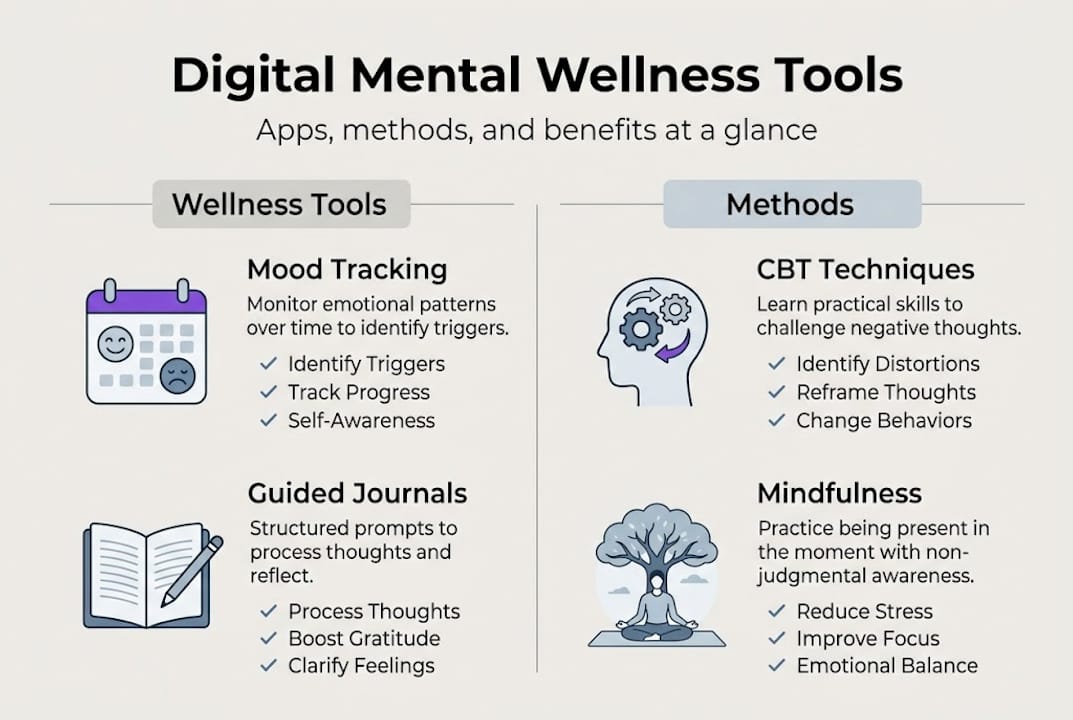
The core elements of digital mental wellness include:
- Guided journaling: Structured prompts that direct your attention toward specific emotional experiences
- Mood tracking: Logging daily emotional states to reveal trends over time
- CBT-based digital interventions: Apps rooted in cognitive behavioral therapy (CBT), a proven approach to changing thought patterns
- AI-powered insights: Personalized feedback and prompts based on your journaling history and mood data
"The goal isn't less screen time. It's smarter screen time, used with intention to process feelings, build resilience, and grow."
The aim is proactive emotional regulation. You're not waiting until things feel overwhelming. You're building awareness and coping skills before they're urgently needed. Exploring AI strategies in mental wellness can show you exactly what that looks like in practice.
How digital tools support emotional regulation and self-growth
Knowing what digital mental wellness covers is one thing. Seeing how specific tools actually move the needle on your emotional health is another. The research here is genuinely striking.
CBT-based digital journaling reduces anxiety by 25 to 50 percent within four weeks, and wearables can now trigger emotion journaling prompts based on detected stress signals. That's not a passive process. It's a feedback loop between your body, your behavior, and your reflection practice.

The numbers across different interventions tell a consistent story:
| Tool type | Mental health benefit | Timeframe |
|---|---|---|
| Digital CBT journaling | 25-50% anxiety reduction | 4 weeks |
| AI-powered mood tracking | Improved self-awareness patterns | Ongoing |
| Structured digital interventions | Depression reduced by 5.61 points, anxiety by 5.21 | 8-12 weeks |
AI-powered prompts make a particular difference during self-reflection. Standard journaling can loop into the same thoughts. AI prompts interrupt that loop by asking questions you wouldn't think to ask yourself, guiding you toward emotional patterns you haven't yet named. Pairing this with journaling techniques for mood regulation builds a practice with real staying power.
Here's how a typical digital mental wellness session looks in practice:
- Check in with your mood tracker before you start, logging your current emotional state and energy level
- Receive a personalized prompt generated by AI based on your recent entries or mood trend
- Write for 10 to 15 minutes in response to the prompt, staying focused rather than freewriting broadly
- Review any AI-generated insight about themes or patterns in your response
- Set one micro-intention based on what you noticed, something small and actionable for the day
This five-step process takes under 20 minutes and creates compounding clarity when practiced consistently. Want to go deeper on the patterns this kind of practice reveals? Unlocking emotional patterns through guided journaling is a natural next step.
Pro Tip: Consistency matters far more than duration. A 10-minute session every day builds more emotional insight than a two-hour session once a week. Treat it like brushing your teeth, not like a retreat.
Digital wellness vs. digital mental health: What's the difference?
Understanding how tools work is only half the equation. There's also an important distinction between wellness tools and treatment apps you need to know before choosing one.
This is a regulatory line, not just a philosophical one. Wellness apps like mood trackers and mindfulness tools are largely unregulated unless they claim to treat a disease. The moment an app claims to treat depression or an anxiety disorder, it enters regulated territory and is subject to oversight from bodies like the FDA.
| Category | Wellness apps | Therapeutic/treatment apps |
|---|---|---|
| Examples | Mood trackers, gratitude journals | Digital CBT programs, digital therapeutics |
| Regulatory status | Largely unregulated | Regulated (FDA oversight possible) |
| Best for | Prevention, personal growth, habit building | Diagnosed mental health conditions |
| Provider involvement | Not required | Often clinician-guided |
For most people using digital tools for self-reflection and growth, wellness apps are the right fit. They're designed for prevention and personal development, not clinical treatment. But if you're dealing with a diagnosed condition, a regulated therapeutic app used alongside professional care is a better path. Mixing the two up can mean either under-treating a real clinical need or over-medicalizing a growth practice.
When selecting trustworthy digital tools, keep these criteria in mind:
- Privacy policy: Does the app clearly state how your data is stored, shared, and protected?
- Evidence-based claims: Are the techniques it uses grounded in peer-reviewed research?
- Reputable sources: Is it recommended or reviewed by recognized organizations in mental health?
- No overclaiming: Does it avoid promising clinical outcomes it isn't regulated to deliver?
Exploring journaling strategies for emotional well-being and life journal techniques can help you figure out which format fits your goals before you commit to a specific app.
Practical tips for using digital mental wellness safely and effectively
Deciding between wellness and treatment apps is important, but using them safely and effectively can make a world of difference in the results you actually experience.
The key is weaving digital techniques into your existing routines rather than treating them as isolated tasks. Morning check-ins, end-of-day reflections, or post-workout mood logs all work because they attach a new behavior to one that's already established. This is called habit stacking, and it dramatically improves consistency.
Here are practical steps for getting the most from digital mental wellness tools:
- Start with one tool, not five. Journaling or mood tracking alone builds a stronger habit than juggling multiple apps at once.
- Set a consistent time for your sessions, morning, evening, or after a regular activity, so it becomes automatic.
- Review your data weekly, not just daily. Emotional patterns often show up across days, not within a single entry.
- Balance digital with offline. Use insights from your app to guide offline conversations, walks, or quiet time.
- Audit your app permissions every few months. Check what data your wellness app collects and whether its privacy settings still match your comfort level.
Pro Tip: Look for apps reviewed or recommended by organizations like the Child Mind Institute or the American Psychological Association. These groups evaluate evidence-based claims and flag misleading ones, saving you from apps that promise more than they can deliver.
Over-reliance on digital wellness tools can cause technostress, a form of mental fatigue from constant digital engagement. The fix isn't to stop using the tools; it's to use them with clear boundaries and purposeful intention.
A step-by-step guide to emotional self-reflection journaling can help you structure your practice in a way that prevents overwhelm. Pairing that with a mental wellness checklist keeps your habits organized. And when you want to go deeper, science-backed emotional regulation strategies add another layer of rigor to your practice.
The real key to digital mental wellness: What most advice misses
Here's the uncomfortable truth most digital wellness content skips over: adding more apps does not equal more insight. It often equals more noise.
We've seen this pattern clearly. People download five journaling apps, track their mood across three platforms, and wonder why they feel more scattered than before. The issue isn't the technology. It's the assumption that volume creates clarity.
Personalization and consistency are what actually move the needle. One well-chosen app, used daily with genuine intention, outperforms a crowded digital toolkit every single time. Even the best AI prompts fail when used superficially or skipped for days at a time. The algorithm can surface a profound question, but only you can sit with it long enough for it to matter.
The deeper gain comes from what happens offline after a session. When you take an insight from your journaling and carry it into a real conversation, a decision, or a moment of pause, that's when the practice earns its value. Guided journaling for self-discovery works best as a bridge to real-world change, not a substitute for it. Technology should serve your growth. It should never become the whole of it.
Ready to take charge of your digital mental wellness?
If you've made it this far, you already think differently about what digital mental wellness can do. The tools are real, the evidence is solid, and the practice is genuinely within reach.

Voisley brings together guided journaling, AI-powered prompts, mood tracking, and emotional pattern visualizations in one private, structured space designed exactly for this kind of growth. Whether you're just starting out or looking to go deeper with your self-reflection practice, there's a format and a tool here that fits where you are right now. Explore more digital wellness tools and find the approach that feels right for you. Your next session could be the one that changes the pattern.
Frequently asked questions
What is the difference between digital mental wellness and digital wellbeing?
Digital mental wellness uses technology for emotional regulation and growth, while digital wellbeing focuses on balanced tech use to avoid harm. The first is generative; the second is protective. Both concepts serve different but complementary purposes.
Do digital journaling and mood tracking apps really help mental health?
Yes. Digital CBT journaling reduces anxiety by 25 to 50 percent within four weeks, and broader digital interventions reduce depression by a mean of 5.61 points on standardized scales. Consistent use is the key variable.
Are all mental wellness apps safe to use?
Wellness apps are largely unregulated unless they claim to treat mental health disorders. Always read the privacy policy and choose options with transparent, evidence-based claims before committing to any platform.
How can I pick the best digital mental wellness tools?
Choose apps with clear privacy policies and look for recommendations from reputable organizations like the Child Mind Institute. Prioritize tools that are honest about what they do, and avoid any app that overclaims treatment outcomes without regulatory backing.