

TL;DR:
- Structured journaling transforms emotional chaos into organized thoughts, reducing stress over time.
- Different techniques like expressive writing, scheduled worry time, and gratitude journaling effectively foster emotional clarity and resilience.
Journaling for stress management is defined as a deliberate writing practice that translates emotional chaos into structured thought, reducing anxiety and building emotional clarity over time. Pennebaker's Emotional Disclosure Theory explains the core mechanism: writing about emotional experiences organizes chaotic thoughts, releasing the cognitive burden that stress creates. The result is not just relief. It is a measurable shift in how your brain processes difficulty. This guide covers the most effective journaling techniques for stress, the science behind each one, and exactly how to build a practice that holds up under real pressure.
How to manage stress with journaling: proven methods that work
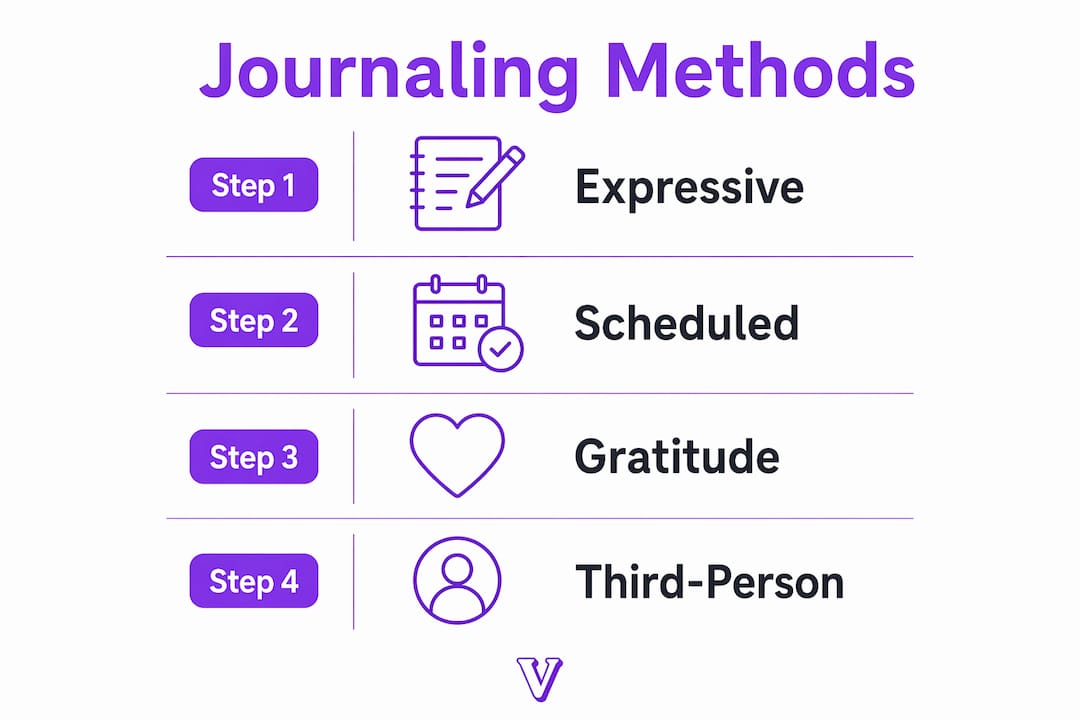
Not all journaling reduces stress equally. Structured journaling protocols reduce stress more effectively than unstructured venting. That distinction matters because most people start by simply dumping frustration onto a page, which can actually amplify anxiety rather than quiet it. The method you choose determines the outcome.
Expressive writing
Expressive writing is the most researched form of stress relief journaling. The optimal protocol is 3–4 sessions of 15–20 minutes each, spaced 1–3 days apart. That spacing gives your nervous system time to integrate what you have written before you return to it. Research with first-year nursing students found that 4 days of expressive writing at 15 minutes per session improved emotional regulation and resilience. The therapeutic effect comes from narrative organization, not from the act of venting alone.
Scheduled worry time
Scheduled worry time journaling assigns a fixed daily window of 20–30 minutes to write down anxieties. This technique contains free-floating worry by giving it a designated place and time. When anxious thoughts arise outside that window, you defer them to the scheduled session. That boundary stops rumination from bleeding into the rest of your day.
Gratitude journaling
Gratitude journaling reduces negative mood, improves sleep, and lowers anxiety by shifting attention toward positive experiences. This works because stress amplifies the brain's negativity bias. Gratitude writing directly counters that bias by training attention toward specific, concrete positives. Three to five specific entries per session outperform long, vague lists. For a deeper look at the psychology behind this approach, positive psychology journaling explains why specificity is the key variable.
Third-person and analytical journaling
Writing about yourself in the third person reduces emotional reactivity. This technique encourages meta-cognition, helping you detach emotionally and reframe stressful events more adaptively. A practical version is the "advising a friend" method: describe your situation as if a close friend is experiencing it, then write the advice you would give them. Analytical journaling pairs well with this by asking "why" and "what next" rather than just "what happened."
Pro Tip: End every session with one forward-looking sentence. Write what you will do differently or what you are choosing to focus on next. This single habit separates productive journaling from circular venting.
How to start and maintain a stress-relief journaling habit
Starting is the easy part. Maintaining a journaling habit under stress, when you least feel like writing, is where most people stall. The setup you choose at the beginning determines how long the habit lasts.

| Element | Recommendation |
|---|---|
| Format | Handwriting, digital app, or voice-to-text based on personal preference |
| Session length | 15–20 minutes per session |
| Frequency | 3–4 sessions per week for stress processing; daily for gratitude or mood tracking |
| Environment | Private, quiet space with minimal interruptions |
| Timing | Morning for intention-setting; evening for reflection and decompression |
| Privacy | Keep entries private to encourage full honesty |
Choosing your format is a real decision, not a minor detail. Handwriting slows your thinking and tends to produce more reflective entries. Digital writing is faster and easier to search over time. Voice journaling suits people who think better out loud and struggle to sit still. None of these is superior. The best format is the one you will actually use consistently.
Ritual matters more than willpower. Attach your journaling session to an existing habit: right after your morning coffee, immediately after a workout, or before you turn off your bedroom light. That pairing reduces the friction of starting. A mindful journaling practice adds a two-minute breathing exercise before writing, which shifts your brain out of reactive mode before the pen hits the page.
The two most common barriers are perfectionism and inconsistency. Perfectionism dissolves when you accept that journaling is not writing. It is thinking on paper. Spelling, grammar, and structure are irrelevant. Inconsistency is best addressed by lowering the minimum: on hard days, write three sentences. That is enough to maintain the habit without demanding energy you do not have.
Pro Tip: Set a recurring phone reminder labeled "3 sentences minimum." On days you feel resistance, that label removes the pressure and keeps the streak alive.
What are common challenges in journaling for stress relief?
Writing to cope with stress only works when the writing moves you forward. Several common patterns undermine that progress.
- Venting without reflection. Describing what went wrong without asking why or what next keeps you stuck in the emotional loop. Every entry needs at least one analytical question.
- Unchecked rumination. Returning to the same painful event repeatedly without reframing it can deepen distress rather than reduce it. If you notice you are writing the same thoughts for more than three sessions, shift to a structured prompt or a different journaling style.
- Trauma without support. Expressive writing can temporarily increase distress when processing deep trauma. Standalone journaling is not a replacement for therapy in those cases. Pair it with professional support when the content feels destabilizing.
- No closing ritual. Sessions that end mid-emotion leave you more activated than when you started. Ending with forward-looking thoughts improves emotional transition after writing.
"The goal of journaling for stress is not to relive what hurt you. It is to build a narrative that makes sense of it, so your brain can file it away and stop treating it as an active threat."
Matching your journaling style to your specific stress type also matters. Acute situational stress responds well to expressive writing. Chronic low-grade anxiety responds better to scheduled worry time or gratitude journaling. If you are dealing with a specific fear or decision, analytical third-person journaling tends to produce the clearest thinking. For prompts designed to create psychological safety during difficult entries, emotionally safe prompts offer a structured starting point.
How does journaling complement broader mental health strategies?
Journaling works best as part of a wider approach to emotional well-being, not as a standalone fix. Combining journaling with exercise, sleep hygiene, and social connection produces stronger and more lasting results than any single practice alone.
Here is how to build journaling into a broader mental health workflow:
- Pair with physical exercise. Write for 10 minutes immediately after a workout. Your cortisol is lower, your thinking is clearer, and the reflective state is easier to access.
- Use sleep hygiene as a trigger. An evening gratitude entry signals to your nervous system that the day is complete. This reduces the cognitive activation that delays sleep onset.
- Integrate CBT techniques. Cognitive behavioral therapy journaling prompts ask you to identify a distorted thought, challenge the evidence for it, and write a more balanced alternative. This is structured stress management through writing at its most effective.
- Add mindfulness reflection. A brief body scan before writing, noticing where you hold tension physically, grounds the session in present-moment awareness rather than abstract worry.
- Maintain social connection. Share selected insights from your journaling with a trusted person or therapist. Journaling surfaces patterns. Conversation helps you act on them.
Journaling shifts brain activity from the amygdala, which drives emotional reactivity, toward the prefrontal cortex, which handles reasoning and problem-solving. That neurological shift is why writing about a stressful event often makes it feel more manageable within minutes. For a structured workflow that integrates these elements, the journaling workflow for mental clarity guide provides a step-by-step framework built on current research.
Key Takeaways
Stress management through writing works because structured journaling methods, not unstructured venting, translate emotional reactivity into adaptive thinking and lasting relief.
| Point | Details |
|---|---|
| Method determines outcome | Structured protocols like expressive writing and scheduled worry time outperform free venting. |
| Session length and spacing matter | 3–4 sessions of 15–20 minutes, spaced 1–3 days apart, produce the strongest stress reduction. |
| Match style to stress type | Use expressive writing for acute stress, gratitude journaling for chronic anxiety, and third-person writing for cognitive reframing. |
| Close every session forward | End each entry with a problem-solving or positive forward-looking thought to avoid emotional activation. |
| Journaling complements, not replaces, therapy | For trauma or complex mental health needs, pair journaling with professional support. |
What I have learned from recommending journaling for stress
The most common mistake people make with stress relief journaling is treating it like a diary. A diary records events. Journaling, done well, interrogates them. That distinction took me a long time to articulate clearly, but it is the single most useful reframe I offer to anyone starting out.
Voisley has seen this pattern repeatedly: people who journal consistently but without structure plateau quickly. They feel heard by the page but not changed by it. The shift happens when they move from description to analysis, from "this happened" to "here is what I think it means and what I will do about it." That move is not natural for most people. It requires prompts, frameworks, or a guide that asks the right questions.
The other thing worth saying plainly: journaling is not a personality type. You do not need to be reflective by nature or love writing to benefit from it. You need a method and a minimum viable habit. Three sentences on a hard day still counts. Incremental consistency beats occasional depth every time. The people who get the most from journaling are not the ones who write the most. They are the ones who show up most often, even imperfectly.
— Voisley
Voisley supports your journaling practice for stress relief
Stress relief journaling is more effective when you have the right structure behind it. Voisley is a guided journaling platform built on science-backed frameworks, offering mood tracking, personalized prompts, and multiple journal types including gratitude, shadow work, and future goals.

The platform's AI with insights helps you spot emotional patterns you might miss on your own, turning individual entries into a clearer picture of your mental health over time. Whether you are just starting a daily journaling habit or refining an existing practice, Voisley gives you the structure and privacy to write with purpose. The tools are designed for people who want real emotional clarity, not just a blank page.
FAQ
Can journaling actually help with stress?
Yes. Writing about emotional experiences organizes chaotic thoughts and reduces cognitive burden, a mechanism explained by Pennebaker's Emotional Disclosure Theory. Structured journaling protocols consistently outperform unstructured venting in clinical research.
How long should a journaling session be for stress relief?
The research-backed recommendation is 15–20 minutes per session, repeated 3–4 times over 1–3 days for processing acute stress. Daily sessions of the same length work well for ongoing anxiety management.
What is the best journaling method for anxiety?
Scheduled worry time journaling, which assigns a fixed 20–30 minute daily window to write anxieties, is the most effective technique for containing ongoing anxiety. Gratitude journaling works well alongside it to counter the negativity bias that anxiety amplifies.
Is it safe to journal about trauma on your own?
Expressive writing can temporarily increase distress when processing deep trauma. Journaling about traumatic experiences is safest when combined with professional therapy rather than practiced alone.
How do I stop journaling from turning into rumination?
End every session with a forward-looking, problem-solving thought. If you notice you are writing the same content across three or more sessions without progress, switch to a structured prompt or a different journaling style such as third-person or analytical writing.