

TL;DR:
- Positive psychology journaling is a structured practice that focuses on building positive emotions, strengths, and gratitude through evidence-based exercises. It improves well-being and optimism, especially when performed consistently with specific, causal reflections over several weeks. This approach differs from traditional venting journaling by emphasizing growth, gratitude, and purpose rather than processing distress.
Positive psychology journaling is the practice of writing intentionally to build positive emotions, personal strengths, and gratitude rather than simply venting about problems or distress. Unlike traditional expressive journaling, this approach draws on evidence-based techniques like gratitude writing, "Three Good Things," and best possible self exercises to shift your emotional baseline upward. A 2025 systematic review of 51 studies confirmed that these methods consistently improve happiness and optimism. If you want to understand what positive psychology journaling is and how to use it to strengthen self-awareness and emotional well-being, this article gives you the full picture.
What is positive psychology journaling, and how does it work?
Positive psychology journaling is a structured writing practice rooted in the science of well-being, developed from the work of researchers like Martin Seligman at the University of Pennsylvania. The goal is not to ignore negative emotions but to deliberately train attention toward positive experiences, personal agency, and strengths. This distinction matters because positive expressive writing aims to cultivate positive emotions and minimize the risk of emotional overwhelm, not simply document your day.

Three core techniques define this practice. The first is "Three Good Things," where you write three specific positive experiences each day and reflect on why they happened, including your personal role in making them occur. The second is the best possible self exercise, where you write in detail about your ideal future across relationships, career, and personal growth. The third is gratitude letter writing, where you compose a detailed letter of appreciation to someone who has positively influenced your life.
What separates these exercises from casual diary writing is the emphasis on specificity and causal reflection. Reflecting on why good things happened transforms journaling from a mood log into a skill-building practice that builds a sense of agency and competence over time.
Pro Tip: When writing your "Three Good Things," resist the urge to list surface-level wins like "had a good lunch." Describe the moment in detail and write one sentence explaining your role in creating it. That causal sentence is where the psychological benefit lives.
| Exercise | Structure | Duration | Primary outcome |
|---|---|---|---|
| Three Good Things | 3 specific positive events + causal reflection | 15 min, 7 consecutive days | Increased happiness, reduced depressive symptoms |
| Best possible self | Detailed narrative of ideal future self | 20 min, 4 consecutive days | Optimism, positive affect, goal clarity |
| Gratitude letter | Written appreciation to a specific person | 15–20 min, one session | Gratitude, social connection, positive emotion |
| Counting blessings | List of things you are grateful for weekly | 10 min, weekly | Life satisfaction, reduced negative affect |
What does the science say about journaling for mental health?
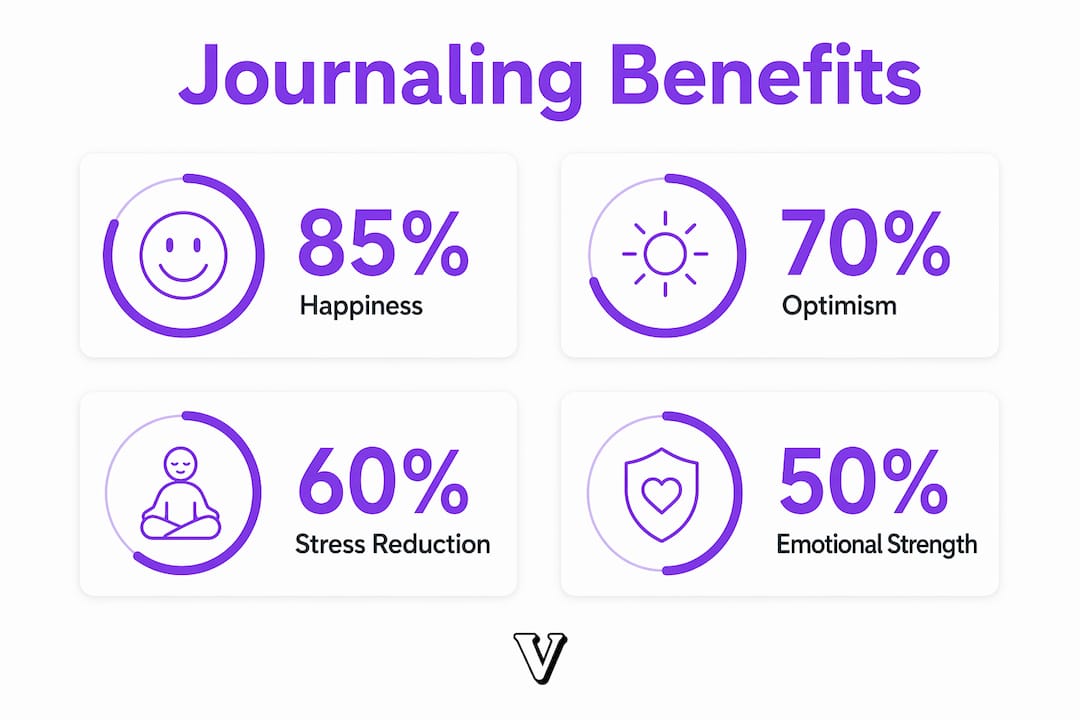
The research base for positive psychology journaling is substantial and growing. A 2025 systematic review covering 51 studies found that positive expressive writing consistently improves psychological well-being, with the strongest effects on happiness and optimism. This means the practice reliably moves the needle on how good people feel about their lives, not just in the short term.
The effects on anxiety and depression are less consistent across studies. Some participants show meaningful reductions in negative symptoms, while others show minimal change. This variability is not a failure of the method. It reflects the fact that journaling for mental health works best as a complement to other support, not a standalone treatment for clinical conditions.
"Positive expressive writing techniques are not all equal in their effects, but gratitude and best possible self exercises show the most consistent evidence for improving subjective well-being." — Systematic review findings, 2025
Individual factors shape outcomes significantly. A 2026 clinical trial found that baseline optimism levels influence how much benefit a person gains from gratitude journaling, with higher optimism predicting stronger and more lasting results. This does not mean pessimists should skip the practice. It means realistic expectations matter, and people with lower baseline optimism may need more time before noticing consistent gains.
The quality of existing research also varies. Many studies use small samples and short follow-up periods. The honest takeaway is that the impact of journaling on wellbeing is real and measurable for positive emotions, but anyone expecting it to replace therapy or medication will be disappointed.
How positive psychology journaling differs from venting journaling
Traditional expressive journaling, often called therapeutic journaling or trauma writing, asks you to write freely about stressful or painful experiences. The theory is that emotional release reduces psychological tension. The reality is more complicated. Traditional venting journaling can temporarily increase negative emotions, particularly for people who are already prone to rumination or who lack strong emotional regulation skills.
Positive psychology journaling takes the opposite approach. Instead of processing distress, it deliberately redirects attention toward what is working, what you value, and who you want to become. The structure itself is protective. Because exercises like "Three Good Things" have a defined format and time limit, they prevent the kind of open-ended spiral that unstructured venting can trigger.
Here is where the two approaches diverge most clearly:
- Focus: Venting journaling centers on problems and distress. Positive psychology journaling centers on strengths, gratitude, and growth.
- Emotional risk: Unstructured venting can amplify negative emotions for rumination-prone individuals. Structured positive writing reduces this risk by design.
- Outcome target: Venting aims for catharsis. Positive journaling aims to build lasting positive emotional patterns.
- Structure: Venting is typically open-ended. Positive psychology techniques use defined prompts, time limits, and reflection questions.
Pro Tip: If you find yourself drifting into problem-focused writing during a positive journaling session, use a reset prompt: "What did I handle well today, and what does that say about my strengths?" It redirects without suppressing your emotions.
Understanding positive psychology as a field helps here. Founded by Seligman and Mihaly Csikszentmihalyi, positive psychology studies what makes life worth living, not just what goes wrong. Journaling within this framework is one of the most accessible positive psychology techniques available, requiring no equipment, no therapist, and no cost.
How to personalize your journaling practice and stay consistent
The most common mistake people make with positive psychology journaling is treating it like an open-ended daily diary. Engagement and individual differences moderate outcomes significantly, meaning the same technique can produce very different results depending on who uses it and how. Experimenting with multiple approaches before settling on one is not indecision. It is good practice.
Start by running each core technique as a short protocol. Try "Three Good Things" for seven consecutive evenings, spending no more than 15 minutes per session. Then try the best possible self exercise for four days. Track how you feel after each session, not just at the end of the week. This gives you real data about which approach fits your personality and current emotional state.
Here is a practical sequence for building your practice:
- Choose one technique from the core three: "Three Good Things," best possible self, or gratitude letter writing.
- Set a fixed time each day, ideally evening for reflection-based exercises and morning for goal-oriented writing.
- Write for 15 to 20 minutes only. Positive expressive writing is most effective in short bursts over consecutive days, not marathon sessions.
- Use specific prompts to stay on track. Examples: "Describe one moment today where you felt capable." "What are you looking forward to in the next month, and why does it matter to you?"
- Review your entries weekly to notice patterns in what brings you positive emotion and where your strengths show up most consistently.
Low motivation is the most common barrier. The fix is not willpower. It is reducing friction. Keep your journal in a visible place, set a phone reminder, and commit to just five minutes if 15 feels like too much. Starting is the hardest part. Journaling prompts for emotional safety can also help when you feel uncertain about what to write.
Pro Tip: Positive psychology journaling can be self-administered at home as a low-cost mental health practice. You do not need a therapist to guide every session. A structured prompt and 15 minutes of honest writing are enough to start seeing results.
Key takeaways
Positive psychology journaling builds emotional well-being by training attention toward strengths, gratitude, and positive experiences through structured, evidence-based writing techniques.
| Point | Details |
|---|---|
| Definition is specific | Positive psychology journaling targets positive emotions and strengths, not just emotional release. |
| Top techniques | "Three Good Things," best possible self, and gratitude letters show the strongest research support. |
| Science is real but nuanced | A 2025 review of 51 studies confirms benefits for happiness and optimism; effects on anxiety vary. |
| Structure prevents rumination | Short 15 to 20 minute sessions with defined prompts reduce the risk of drifting into negative spirals. |
| Personalization matters | Baseline optimism and engagement level influence outcomes, so experimenting with techniques is necessary. |
Why specificity is the part most people skip
At Voisley, we have worked with thousands of users across gratitude journals, future goals entries, and mood tracking sessions. The single most consistent pattern we see is this: people who write vaguely get vague results. Someone who writes "I'm grateful for my family" every day for a week feels roughly the same at the end of it. Someone who writes "My sister called me today to check in after a hard week, and I felt genuinely seen. I think I created that by being honest with her last month about how I was struggling" walks away with something real.
The research backs this up completely. Causal reflection, specifically writing about why a good thing happened and what your role was in it, is what converts journaling from a mood diary into a self-awareness tool. Most people skip this step because it takes more effort. That effort is exactly where the value is.
We also think the field undersells the importance of patience. A single week of "Three Good Things" will not rewire your emotional patterns. But six weeks of consistent, specific, causally reflective writing will shift how you notice and interpret your daily experience. That shift is quiet. It does not feel dramatic. One day you realize you are scanning your environment for what went right instead of what went wrong, and that is the practice working.
The other thing worth saying plainly: positive psychology journaling is not toxic positivity. You are not pretending problems do not exist. You are training a skill, the same way you would train a muscle, to notice and build on what is already good. That is a fundamentally different act than denial.
— Voisley
Start your positive psychology journaling practice with Voisley
Voisley is built specifically for people who want more than a blank page. The platform combines guided journaling with AI-powered mood tracking, personalized prompts, and visualizations that show your emotional patterns over time.

Whether you are starting with gratitude entries, working through a best possible self exercise, or exploring emotional regulation through journaling, Voisley gives you the structure to make it stick. The app also integrates AI-supported mental health approaches that help personalize your practice based on your emotional trends. Visit Voisley to explore the full range of journaling tools and start building a practice grounded in real psychological science.
FAQ
What is positive psychology journaling in simple terms?
Positive psychology journaling is a structured writing practice that uses evidence-based exercises like gratitude writing and "Three Good Things" to build positive emotions, strengths, and self-awareness rather than focusing on problems.
How is positive psychology journaling different from regular journaling?
Regular journaling often involves open-ended venting about stress or daily events, which can increase negative emotions for some people. Positive psychology journaling uses defined prompts and reflection questions to intentionally cultivate positive feelings and reduce the risk of rumination.
How long should a positive psychology journaling session be?
Research supports short, focused sessions of 15 to 20 minutes over several consecutive days. This structure maintains focus on positive content and prevents the open-ended drift that can undermine the practice's benefits.
Does positive psychology journaling actually work?
A 2025 systematic review of 51 studies found consistent improvements in happiness and optimism from positive expressive writing techniques. Effects on anxiety and depression are more variable, so the practice works best as a complement to broader mental health support.
Who benefits most from positive psychology journaling?
People with higher baseline optimism tend to see stronger and more lasting results, according to a 2026 clinical trial. That said, anyone who engages consistently and writes with specificity and causal reflection can benefit, regardless of their starting point.