

TL;DR:
- Positive psychology is the scientific study of human strengths, positive emotions, and conditions that promote flourishing. It emphasizes building well-being through evidence-based practices like gratitude journaling, strength spotting, and meaning-making, rather than ignoring negative emotions or offering quick fixes. Consistent, deliberate practice of these methods improves long-term life satisfaction and physical health outcomes.
Positive psychology is defined as the scientific study of human strengths, positive emotions, and the conditions that allow individuals to flourish. Martin Seligman formally introduced it as a distinct movement in 1998, shifting the field's focus away from treating mental illness toward understanding what makes life genuinely worth living. This is not self-help dressed in academic clothing. It is a research-driven discipline with measurable outcomes, evidence-based practices, and a growing body of clinical support. If you want to understand how to build lasting well-being rather than simply manage symptoms, positive psychology offers a structured, science-backed path forward.
What is positive psychology and how does it work?
Positive psychology focuses on human strengths and the factors that allow people to thrive beyond merely surviving. Where traditional psychology spent decades cataloging disorders and deficits, positive psychology asks a different question: what conditions produce genuine flourishing? The answer involves cultivating positive emotions, building meaningful relationships, finding purpose, and engaging fully with life's challenges.

The field does not dismiss suffering or pretend hardship is irrelevant. It treats well-being as a skill set that can be developed through deliberate practice. Seligman's original framing, drawn from his 1998 American Psychological Association presidential address, emphasized virtues and strengths as the primary levers for a meaningful life. That framing has since been refined, tested, and expanded by researchers across clinical, organizational, and educational settings.
The positive psychology definition, at its core, is straightforward: study what works in human experience, not just what goes wrong. This makes it a natural complement to therapies like cognitive behavioral therapy and mindfulness-based stress reduction, not a replacement for them.
What are the core principles and models of positive psychology?
The most widely used framework in positive psychology is the PERMA model. PERMA comprises five elements used to measure and design well-being: Positive Emotions, Engagement, Relationships, Meaning, and Accomplishment. Each element is independently pursued and intrinsically motivating, meaning people seek them for their own sake rather than as a means to another goal.
Here is what each element covers in practice:
- Positive Emotions: Joy, gratitude, serenity, interest, hope, pride, amusement, inspiration, awe, and love. These are not just pleasant feelings. They serve a functional purpose.
- Engagement: Deep absorption in activities that match your skill level to challenge, often called flow. Athletes, musicians, and surgeons describe this state regularly.
- Relationships: Authentic connection with others. Social bonds are among the strongest predictors of long-term well-being in the research literature.
- Meaning: Belonging to and serving something larger than yourself, whether through work, community, spirituality, or creative purpose.
- Accomplishment: Pursuing achievement for its own sake, not just for external rewards. Mastery matters independently of recognition.
Two theoretical mechanisms explain why these elements work. First, broaden-and-build theory holds that positive emotions expand your thought-action repertoire over time, building psychological resources rather than delivering instant happiness. Second, self-determination theory identifies autonomy, competence, and relatedness as the three core needs that drive sustained engagement with any practice.
Pro Tip: When evaluating any well-being tool or app, check whether it targets specific PERMA components. A gratitude journal addresses Positive Emotions and Meaning. A strength-spotting exercise targets Engagement and Accomplishment. Matching the tool to the component produces better results than using generic "feel good" content.
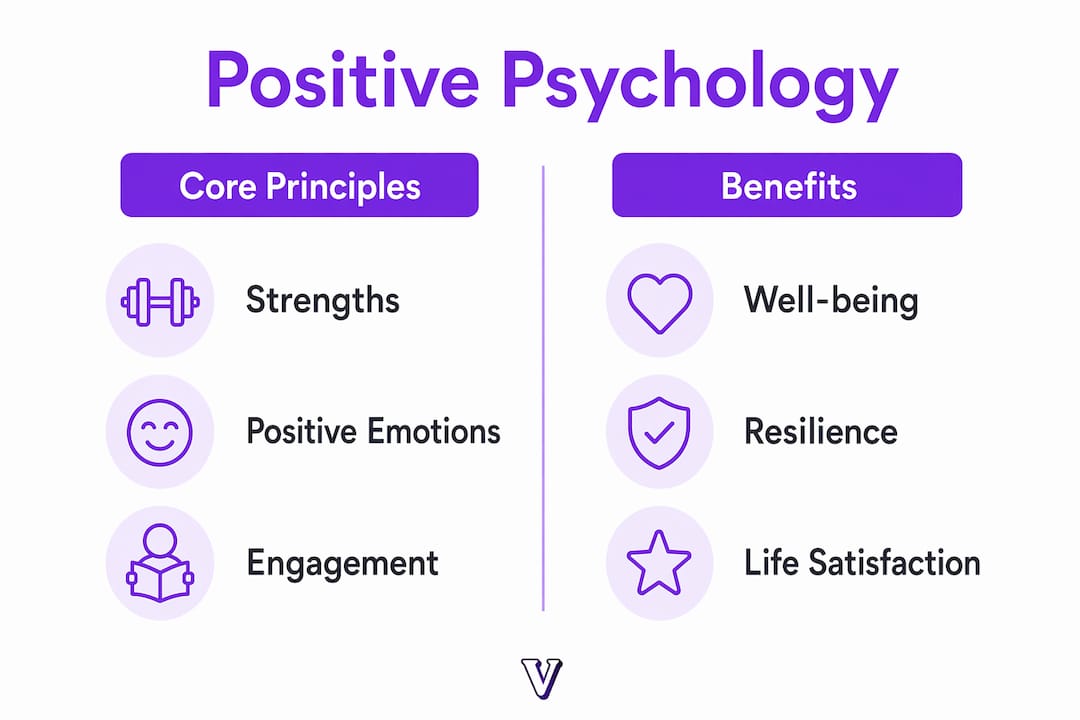
Positive psychology also distinguishes between two types of well-being. Hedonic well-being centers on pleasure and the absence of pain. Eudaimonic well-being centers on meaning, purpose, and personal growth. Research consistently shows that eudaimonic well-being predicts longer-term life satisfaction more reliably than hedonic well-being alone.
| Well-being type | Focus | Long-term outcome |
|---|---|---|
| Hedonic | Pleasure, positive affect, low pain | Short-term mood improvement |
| Eudaimonic | Meaning, purpose, personal growth | Sustained life satisfaction |
What evidence supports positive psychology interventions?
Positive psychology interventions, commonly called PPIs, are structured exercises designed to increase well-being by targeting specific PERMA components. Meta-analyses show effect sizes of approximately d=0.29 to d=0.52 across multiple studies on life satisfaction. These are small-to-moderate effects, which is exactly what you should expect from behavioral interventions. Anyone promising dramatic transformation from a single exercise is selling something else.
The most empirically supported PPIs include:
- Three-good-things journaling: Writing down three positive events each day and their causes. This practice reliably increases well-being and reduces depressive symptoms over two to four weeks.
- Best possible self: Imagining your life going as well as it possibly could and writing about it in detail. This targets optimism and goal-setting simultaneously.
- Loving-kindness meditation: Directing compassion toward yourself and others in structured meditation sessions. Research links this practice to increased positive affect and reduced self-criticism.
- Strength spotting: Identifying your top character strengths using tools like the VIA Character Strengths survey and deliberately applying them in new contexts.
- Acts of kindness: Performing deliberate prosocial behaviors. Studies show that concentrating acts of kindness on a single day produces stronger well-being effects than spreading them across a week.
PPIs grounded in broaden-and-build theory and self-determination theory show the strongest sustained results. The key word is sustained. A single gratitude journal entry does nothing. A consistent 21-day practice changes measurable patterns in how you process daily experience.
Technology-mediated PPIs are an active research area in 2026. Apps and digital platforms that combine mood tracking, personalized prompts, and progress visualization show early evidence of improving adherence and outcomes. The motivational design of these tools matters enormously. Platforms that support autonomy, build competence gradually, and create a sense of connection produce better long-term engagement than those relying on streaks or external rewards alone.
How does positive psychology differ from toxic positivity?
The central misconception about positive psychology is confusing it with generic positive thinking. Toxic positivity tells you to suppress negative emotions, reframe everything as a blessing, and maintain a cheerful facade regardless of circumstances. Positive psychology does the opposite.
Positive psychology does not mean ignoring negative emotions. It promotes emotional agility, the capacity to experience difficult feelings without being controlled by them, and to return to a baseline of engagement and meaning. Grief, anger, and fear are not obstacles to well-being. They are part of the full emotional range that a psychologically healthy person navigates with skill.
Several distinctions are worth keeping clear:
- Positive psychology is science-based, not wishful thinking. Every major intervention has been tested in controlled studies.
- It builds on strengths without denying weaknesses. Identifying your character strengths does not mean pretending your limitations do not exist.
- It acknowledges that positivity is challenging to maintain. Research explicitly notes that sustaining positive emotions requires consistent effort and realistic expectations.
- It connects to physical health outcomes. Positive emotions correlate with better physical health and longevity, not just improved mood. This makes the field relevant far beyond mental wellness.
Pro Tip: If a positive psychology practice feels like it requires you to pretend everything is fine, you are doing it wrong. The goal is to build psychological resources that help you face reality more effectively, not to avoid it.
How to practice positive psychology in daily life
Applying positive psychology principles does not require a therapist or a formal program. It requires consistency, a willingness to reflect honestly, and a realistic understanding of what these practices can and cannot do.
Here is a practical sequence for building a personal positive psychology practice:
- Identify your character strengths. Take the free VIA Character Strengths survey at viacharacter.org. Your top five strengths are your signature strengths. Use them deliberately in at least one new context each week.
- Start a gratitude journal. Write three specific things you are grateful for each evening, along with one sentence explaining why each happened. Specificity matters more than volume. "I am grateful for my health" produces weaker effects than "I am grateful that my friend called to check on me today because it reminded me I am not alone."
- Schedule engagement activities. Identify one activity that reliably produces flow for you, whether that is coding, cooking, drawing, or playing an instrument. Protect time for it weekly. Engagement is not a luxury. It is a PERMA component with measurable well-being effects.
- Invest in relationships intentionally. Emotional resilience for personal growth is built substantially through social connection. Schedule one meaningful conversation per week with someone who matters to you. Active listening counts more than time spent.
- Define your meaning statement. Write one to two sentences describing what gives your life purpose beyond daily tasks. Revisit it monthly. Meaning is not fixed. It evolves as you do.
- Track your emotional patterns. Mood tracking over two to four weeks reveals patterns you cannot see in real time. You may discover that certain activities, people, or times of day consistently shift your emotional state. That data is actionable.
Positive psychology journaling combines several of these practices into a single habit. Writing about gratitude, strengths, and meaning in a structured format produces cumulative benefits that informal reflection does not. The structure matters because it targets specific PERMA components rather than producing general emotional venting.
Personal growth through positive psychology is best supported by combining meaning-oriented and strength-based interventions rather than focusing exclusively on feel-good practices. A gratitude journal alone will not produce lasting change. Pair it with strength spotting and a clear sense of purpose, and the effects compound over time.
Key takeaways
Positive psychology produces measurable, lasting well-being gains when its core principles are applied consistently through evidence-based practices like gratitude journaling, strength spotting, and meaning-building.
| Point | Details |
|---|---|
| Science-based definition | Positive psychology studies strengths and flourishing, not just the absence of illness. |
| PERMA model | Five elements (Positive Emotions, Engagement, Relationships, Meaning, Accomplishment) guide effective practice. |
| Realistic effect sizes | PPIs show small-to-moderate effects; consistency over weeks produces measurable gains. |
| Not toxic positivity | Positive psychology promotes emotional agility, not suppression of negative feelings. |
| Compound practices | Combining meaning-oriented and strength-based exercises produces stronger results than single-focus habits. |
Why positive psychology deserves more credit than it gets
Most people encounter positive psychology through its worst ambassadors: motivational posters, gratitude hashtags, and productivity influencers who strip the science out entirely. That exposure makes it easy to dismiss the field as soft or superficial. That dismissal is a mistake.
At Voisley, we work with the research directly, and what stands out is how demanding genuine positive psychology practice actually is. Writing a meaningful gratitude entry requires honest reflection, not cheerful affirmations. Identifying and applying your character strengths requires self-awareness that most people actively avoid. Building eudaimonic well-being means confronting questions about purpose and meaning that are genuinely uncomfortable.
The field also resists quick fixes in a way that makes it less marketable but more credible. The effect sizes from meta-analyses are modest. Researchers say so openly. That honesty is a feature, not a flaw. It means the science is not being oversold, and the practices that do show consistent results are worth taking seriously.
What we find most underappreciated is the physical health dimension. The connection between positive emotions and longevity is not a metaphor. It shows up in cardiovascular outcomes, immune function, and recovery rates. That makes positive psychology relevant to anyone interested in long-term health, not just mental wellness.
The one caution worth repeating: positive psychology works when it is practiced, not consumed. Reading about gratitude journaling produces zero benefit. Doing it for three weeks produces measurable ones. The gap between knowing and doing is where most people get stuck, and no amount of content closes that gap except the practice itself.
— Voisley
Start building your well-being practice with Voisley

Voisley is built specifically for people who want to apply positive psychology principles in a structured, science-backed way. The platform combines guided journaling across multiple formats, including gratitude, shadow work, and future goals, with AI-powered mood tracking and emotional pattern visualization. Every feature is designed to target specific PERMA components rather than offering generic wellness content. If you are ready to move from understanding positive psychology to actually practicing it, explore Voisley and find the tools that match where you are right now. Consistent practice, supported by the right structure, is what produces lasting change.
FAQ
What is the positive psychology definition in simple terms?
Positive psychology is the scientific study of human strengths, positive emotions, and the conditions that allow people to flourish. It focuses on building well-being rather than treating mental illness.
What does positive psychology study?
Positive psychology studies topics including positive emotions, character strengths, meaning, engagement, resilience, and the social conditions that support human flourishing. The PERMA model organizes these topics into five measurable elements.
What are the main benefits of positive psychology?
Research shows that positive psychology interventions improve life satisfaction, reduce depressive symptoms, and correlate with better physical health outcomes including longevity. Effects are small to moderate but reliable with consistent practice.
How is positive psychology different from positive thinking?
Positive psychology is evidence-based and does not advocate suppressing negative emotions. Positive thinking, particularly toxic positivity, encourages emotional avoidance. Positive psychology promotes emotional agility and realistic engagement with both strengths and challenges.
How can I start practicing positive psychology today?
Begin with three-good-things journaling each evening, take the free VIA Character Strengths survey to identify your signature strengths, and commit to one engagement activity per week. Consistency over two to four weeks produces the first measurable effects.