

TL;DR:
- Visualization in therapy uses mental imagery to influence emotional states and support healing. It activates brain regions similar to real perception, helping reduce anxiety, depression, and pain through consistent practice.
Visualization in therapy is the deliberate use of mental imagery to influence emotional states, reduce psychological distress, and support healing. Clinically, this practice falls under the broader category of mental imagery interventions, which include techniques like Guided Imagery, Imagery Rescripting, and Imagery Rehearsal Therapy. The role of visualization in therapy is well supported by neuroscience: mental imagery activates the same brain regions as real perception, making it a uniquely powerful tool for emotional processing. Research confirms that visualization reduces anxiety, depressive symptoms, and physical pain when applied consistently within a therapeutic framework. Understanding how and why it works gives you a real advantage in using it effectively.
What evidence supports visualization techniques in therapy?
Clinical research on visualization is substantial and growing. Guided Imagery studies show anxiety reductions comparable to established psychological interventions, and 86% of Imagery Rescripting interventions are enacted from the client's own perspective. That statistic matters because first-person imagery produces stronger emotional engagement than watching yourself from the outside.
The benefits of visualization in therapy extend well beyond anxiety. Studies confirm reductions in depressive symptoms and chronic pain, improvements in sleep quality among people with PTSD, and measurable gains in emotional regulation. These are not minor effects. They reflect a consistent pattern across diverse populations and clinical settings.
One reason visualization works so reliably is what researchers call "functional equivalence." The brain does not sharply distinguish between a vividly imagined event and a real one. Imagery feels more real than verbal thought, which is why it produces stronger emotional responses. A person who mentally rehearses a feared situation activates the same neural circuits as someone who actually faces it, but in a controlled, safe environment.
Short, consistent practice also outperforms occasional long sessions. Daily sessions of 10–15 minutes yield better emotional regulation and skill acquisition than infrequent longer ones. That finding has direct implications for how therapists structure homework and how individuals build a personal practice.
How does visualization work in the brain and body?
Visualization shifts the nervous system from a sympathetic state (fight or flight) to a parasympathetic state (rest and recovery). Physiological effects include reduced cortisol, lower heart rate, decreased blood pressure, and reduced muscle tension. These changes happen because the brain interprets vivid mental imagery as a real sensory experience, triggering the same calming cascade it would during actual relaxation.

The emotional amplification effect is equally significant. Because imagery bypasses the verbal, analytical mind, it reaches emotional memory more directly. This is why a therapist asking a client to imagine a safe place produces a faster physiological shift than simply talking about safety. The image does the work that words cannot.
Perspective matters more than most people realize. Internal imagery, seeing a scene through your own eyes rather than watching yourself from the outside, activates emotional and motor brain areas more effectively. Therapists coach clients to shift from the "movie camera" view to the first-person view to deepen engagement and emotional processing.
Multisensory engagement strengthens the effect further. Incorporating sounds, physical sensations, smells, and temperature into a mental image creates a richer neural signal. This is especially useful for clients who struggle to produce clear visual images.
Pro Tip: If you find it hard to visualize clearly, start with a familiar physical sensation, such as the warmth of sunlight on your skin, and build the image outward from there. Sensory anchors activate the same neural pathways as visual imagery.
Key mechanisms that make visualization effective:
- Parasympathetic activation lowers physiological stress markers within minutes of practice.
- Functional equivalence means the brain treats vivid imagery as near-real experience.
- First-person perspective deepens emotional and motor engagement.
- Multisensory imagery bypasses low visualization ability and activates neural pathways through other senses.
- Slowing the mental simulation to real-time speed improves the transfer of skills to actual behavior.
What are the main visualization techniques used in therapy?
Guided Imagery
Guided Imagery is the most widely used visualization technique in therapy. A therapist or recorded script leads the client through a detailed sensory scene, typically a calm, safe environment. The goal is to activate the parasympathetic nervous system, reduce acute anxiety, and build a mental refuge the client can return to independently.
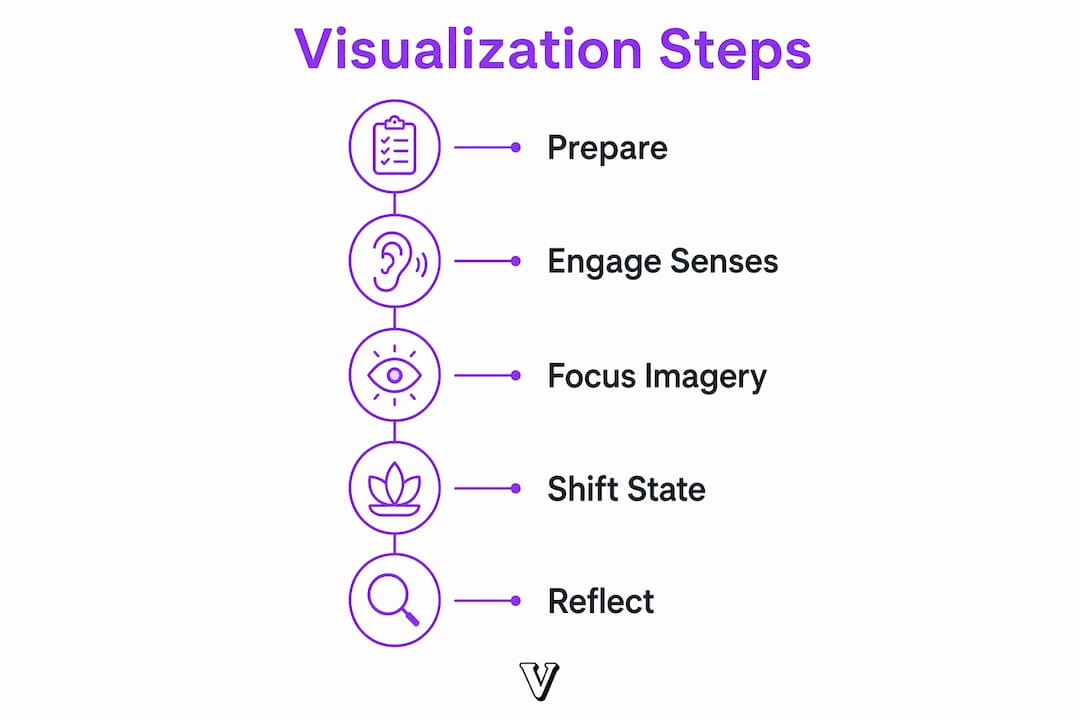
Steps in a standard Guided Imagery session:
- Begin with slow, diaphragmatic breathing to settle the nervous system.
- Close your eyes and allow a safe, peaceful place to form in your mind.
- Engage all senses: notice colors, sounds, textures, and temperature.
- Spend 10–15 minutes in the image, allowing the body to respond naturally.
- Slowly return to the room and note any physical or emotional shifts.
Imagery Rescripting
Imagery Rescripting targets distressing memories directly. The client revisits a painful memory in imagination and then rewrites the outcome, introducing a compassionate figure, a different response, or a sense of mastery. Imagery Rescripting targets the hotspot of traumatic memories to modify emotional responses and induce a felt sense of empowerment. This technique is used in trauma therapy, social anxiety treatment, and work with shame-based experiences.
Imagery Rehearsal Therapy
Imagery Rehearsal Therapy (IRT) was developed specifically for nightmare disorder and PTSD. The client selects a recurring distressing dream, rewrites it with a positive alternative ending while awake, and then rehearses the new version in imagination daily. IRT has well-established protocols that reduce PTSD symptoms, improve sleep quality, and give clients a sense of agency over their own minds.
The table below compares these three techniques by primary purpose and clinical context:
| Technique | Primary purpose | Clinical context |
|---|---|---|
| Guided Imagery | Anxiety reduction, relaxation | General therapy, medical settings |
| Imagery Rescripting | Memory modification, shame reduction | Trauma, social anxiety, depression |
| Imagery Rehearsal Therapy | Nightmare reduction, PTSD symptom relief | PTSD, sleep disorders |
Personalization is non-negotiable across all three methods. Visualization works best as a non-directive, client-centered tool. Therapists guide clients toward personally meaningful imagery rather than prescribing specific scenes. A client who finds forests threatening will not benefit from a forest scene, no matter how serene it sounds to the therapist.
How can you use visualization for emotional well-being?
Consistent, short practice is the foundation. The 10–15 minute daily window recommended by current protocols is achievable for most people and produces measurable benefits over weeks. Irregular long sessions do not produce the same neural consolidation.
Practical steps for building a personal visualization practice:
- Choose a fixed time each day, such as morning before checking your phone or evening before sleep.
- Start with a simple safe-place image before attempting more complex techniques like Imagery Rescripting.
- Use first-person perspective from the start to maximize emotional engagement.
- Slow your mental simulation to real-time speed. Rushing through an image reduces its effectiveness.
- If visual imagery is difficult, anchor the practice in a physical sensation or a familiar sound first.
One common misconception is that visualization means picturing only positive outcomes. Effective visualization emphasizes process simulation, including obstacles and coping responses, not just the desired result. Mentally rehearsing how you will handle a difficult conversation is more useful than simply imagining it going perfectly. The brain needs the full sequence to build genuine confidence.
Pro Tip: When preparing for a stressful event, visualize the process in real time, including a moment where something goes slightly wrong and you handle it calmly. This "coping rehearsal" builds more durable confidence than outcome-only imagery.
The impact of visualization on mental health compounds when it is paired with other practices. Journaling after a visualization session captures insights while they are fresh. Mindfulness practice sharpens the sensory awareness that makes imagery richer. Breathwork deepens the parasympathetic shift. You can read more about emotional regulation strategies that pair well with visualization for a fuller picture of how these tools work together.
Ethical considerations apply in therapeutic settings. Visualization should not be used to implant specific memories or push clients toward predetermined emotional conclusions. The therapist's role is to create conditions for the client's own imagery to emerge, not to direct the content.
Key Takeaways
Visualization in therapy works because the brain treats vivid mental imagery as near-real experience, activating the same neural circuits that govern emotion, memory, and physical response.
| Point | Details |
|---|---|
| Functional equivalence drives results | The brain activates the same regions for vivid imagery as for real events, producing genuine emotional change. |
| First-person perspective matters | Seeing through your own eyes in imagery engages emotional and motor areas more deeply than an observer view. |
| Short daily practice outperforms long sessions | Ten to fifteen minutes daily produces better neural and emotional outcomes than infrequent longer sessions. |
| Personalization is non-negotiable | Therapists guide clients to find their own meaningful imagery rather than prescribing standard scenes. |
| Process rehearsal beats outcome fantasy | Visualizing how you cope with obstacles builds more durable confidence than imagining only success. |
What I have learned from watching visualization work in practice
Most people come to visualization expecting it to feel like daydreaming. It does not. When done with intention and the right perspective, it produces a physical response within minutes. That shift from tension to calm is not subtle. You can feel it in your shoulders, your breathing, and the quality of your thoughts.
The biggest mistake I see is treating visualization as a passive activity. People close their eyes, let vague images drift by, and wonder why nothing changes. Effective therapeutic visualization is active. You are constructing a scene with deliberate sensory detail, holding it, and letting your nervous system respond. The difference between passive drifting and active imagery is the difference between watching a movie and being in one.
I have also seen how much personalization matters. A therapist who insists on a beach scene for a client who grew up fearing the ocean is not helping. The technique only works when the imagery belongs to the client. The therapist's job is to ask good questions and get out of the way.
The research on well-being visualization consistently shows that the people who benefit most are those who practice regularly and adapt the technique to their own sensory strengths. Some people are more auditory than visual. Some respond more to physical sensation. The brain does not care which sensory door you use. It just needs a vivid enough signal to respond.
Visualization is not a replacement for behavioral change or professional therapy. It is a tool that makes both more effective by giving the nervous system a safe space to rehearse what the mind is working toward.
— Voisley
How Voisley supports your visualization practice
Voisley is built for people who take their emotional well-being seriously and want structured tools to support that work.

The platform combines guided journaling, mood tracking, and AI-powered insights to help you build the kind of self-awareness that makes visualization more effective. After a visualization session, Voisley's guided journaling tools give you a structured space to capture what surfaced, track emotional patterns over time, and connect insights across sessions. Features like gratitude journals, shadow work prompts, and future-goals journaling complement therapeutic visualization by deepening the reflection that follows it. If you are ready to pair mental imagery with consistent self-reflection, Voisley gives you the framework to make that practice stick.
FAQ
What is the role of visualization in therapy?
Visualization in therapy uses deliberate mental imagery to reduce anxiety, process trauma, and build emotional regulation skills. It works by engaging the same brain regions activated during real experience, producing genuine psychological and physiological change.
How long should a visualization session last?
Daily sessions of 10–15 minutes produce better emotional and neural outcomes than infrequent longer sessions. Consistency matters more than duration.
Can visualization help with trauma?
Imagery Rescripting and Imagery Rehearsal Therapy are both evidence-based techniques that directly address traumatic memories and PTSD symptoms. IRT has well-established protocols for reducing nightmares and improving sleep in people with PTSD.
What if I struggle to visualize clearly?
Low visualization ability is not a barrier. Multisensory engagement using sounds, physical sensations, or temperature activates the same neural pathways as visual imagery and produces comparable therapeutic benefits.
Is visualization a replacement for therapy?
Visualization is a tool used within therapy, not a substitute for it. It works best when integrated with other evidence-based approaches and guided by a trained therapist, particularly for trauma-related work.