

TL;DR:
- Visualization transforms abstract emotions into tangible images, producing measurable physiological benefits for emotional regulation. AI-generated imagery aligned with personal reappraisals enhances emotional shifts, especially when paired with reflective journaling. Naturalistic visuals and active engagement deepen stress recovery and foster lasting self-awareness.
Visualization is defined as the deliberate use of mental imagery or external visual representations to process emotions, regulate stress, and build self-awareness. The role of visualizations in wellbeing extends far beyond simple relaxation exercises. Research now confirms that structured visual practices, from digital mandala coloring to AI-generated emotional imagery, produce measurable physiological changes including reduced heart rate and lower skin conductance. Whether you are working through anxiety, building mindfulness habits, or seeking deeper emotional clarity, visualization gives abstract feelings a concrete form you can actually work with.
How do visualization techniques improve mental wellbeing?
Visualization reduces anxiety and enhances emotional regulation by promoting flow states and reinforcing cognitive reappraisal, two mechanisms with strong physiological backing. When you engage with a visual task that demands just enough attention to quiet mental chatter, your autonomic nervous system begins to calm. This is not a metaphor. It is measurable.
A 2026 Frontiers in Public Health study found that digital mandala coloring reduces state anxiety by inducing a flow state that directly mediates heart rate and skin conductance reductions. That finding matters because it confirms the body responds to visual engagement, not just the mind. The calming effect is physiological, not purely psychological.
Cognitive reappraisal, the practice of reframing how you interpret a stressful event, gets a significant boost from visual support. A 2026 controlled study published in Frontiers in Artificial Intelligence showed that AI-generated imagery aligned with a user's verbal reappraisal prompt cuts negative affect more effectively than mental-only reappraisal techniques. The visual component anchors the reframe in something tangible, making the emotional shift stick.
Serotonin pathways also respond to positive visual stimulation, particularly imagery tied to nature, safety, and personal meaning. This is why visualization practices for emotional health work best when the imagery connects to something personally resonant rather than generic stock photos of sunsets.
Pro Tip: When practicing visualization for stress relief, choose imagery that feels personally meaningful rather than conventionally "calming." A forest scene that reminds you of a specific memory will outperform a generic beach photo every time.
What types of visualizations benefit mental health and how do they compare?
Not all visualization modalities work the same way. The impact of visualizations on health depends heavily on three factors: realism, interactivity, and how well the visual aligns with your emotional state.
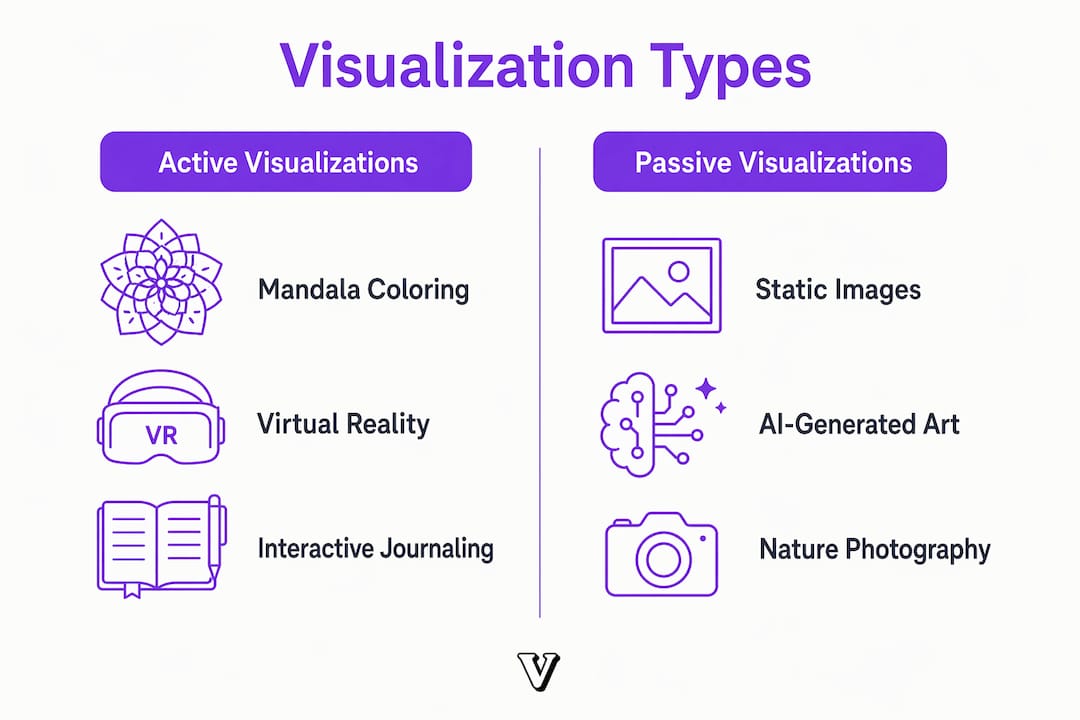
Interactive digital visualizations
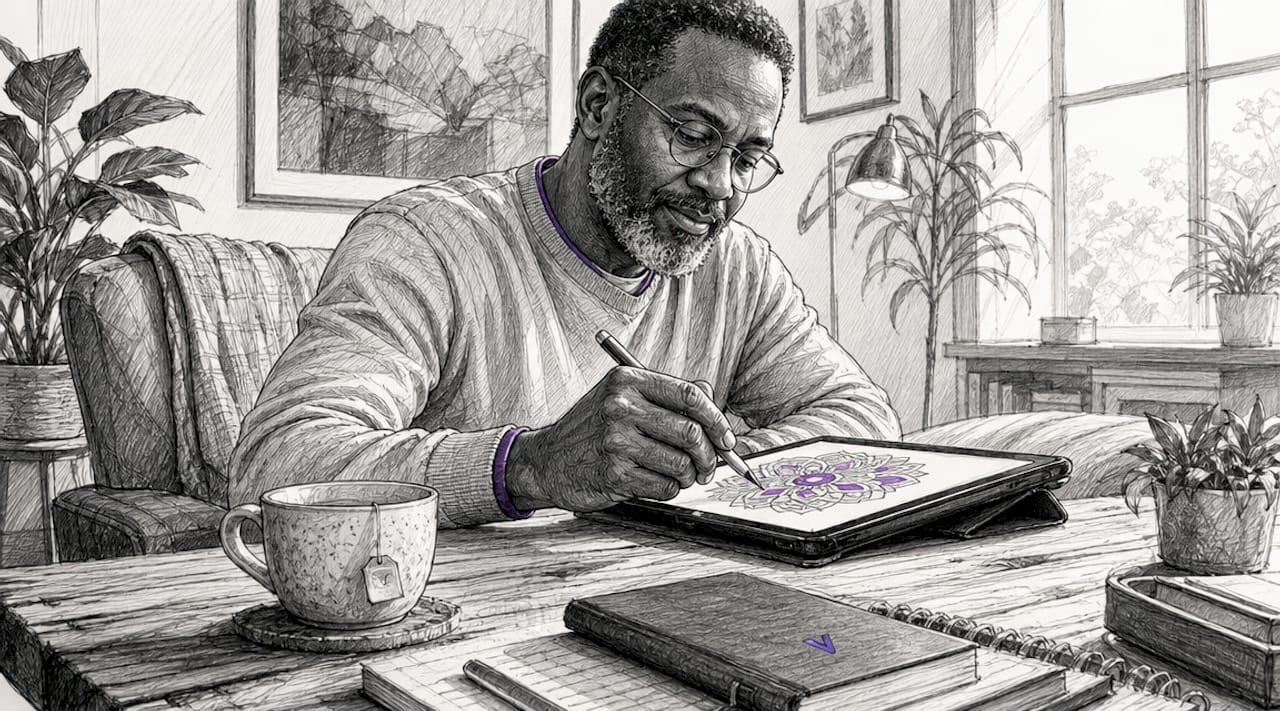
Digital tools like mandala coloring apps and immersive virtual reality nature environments engage you actively. The operational fluency of these tools, meaning smooth and intuitive interaction, enhances flow state more than complex gamified features. Simpler sliding interactions create deeper immersion and better anxiety reduction than point-scoring mechanics. This is a counterintuitive finding: less complexity produces more therapeutic benefit.
AI-generated emotionally congruent imagery
Generative AI tools that translate your written emotional narrative into a visual representation offer a different kind of benefit. The semantic alignment between your prompt and the resulting image is what drives efficacy, not the aesthetic quality of the image itself. A visually striking image that misses your emotional intent does almost nothing. An image that captures the feeling precisely, even if imperfect artistically, produces real affective relief.
Static educational visuals
Visual educational materials, such as diagrams, infographics, and illustrated guides, reduce information overload and improve comprehension. A 2026 randomized controlled trial found that visual aids reduce anxiety among patients by improving self-care understanding and reducing reliance on repeated verbal instructions. The mechanism here is cognitive load reduction rather than emotional immersion.
Realistic nature imagery
Representational style matters more than most people expect. A VR study found that realistic nature imagery facilitates better stress recovery than polygonal or abstract visual styles. Leafiness, natural light, and organic forms trigger the stress recovery response more reliably than stylized or geometric interpretations of the same scenes.
| Modality | Primary mechanism | Best use case |
|---|---|---|
| Digital mandala coloring | Flow state induction | Acute anxiety reduction |
| AI-generated imagery | Cognitive reappraisal support | Emotional reframing sessions |
| Static educational visuals | Cognitive load reduction | Learning and self-care planning |
| Realistic VR nature scenes | Autonomic nervous system recovery | Stress recovery and restoration |
| Mood trend charts | Pattern recognition | Long-term self-awareness building |
The key distinction between passive and active visualizations is mental effort. Active formats like mandala coloring require enough engagement to produce flow. Passive formats like nature imagery work through exposure alone. Both have value, but they serve different emotional needs.
How can you effectively use visualization to enhance emotional clarity and mindfulness?
Knowing that visualization works is one thing. Building a practice that actually fits your life is another. Here is a structured approach to incorporating visualization techniques for mental wellness into your daily routine.
- Start with a clear emotional anchor. Before any visualization session, name what you are feeling. Write it down in one sentence. This gives your visual practice a specific target rather than a vague intention.
- Choose your modality based on your current state. If you are acutely anxious, an interactive tool like a mandala app will serve you better than passive imagery. If you are mentally exhausted, a realistic nature scene requires less effort and still delivers recovery benefits.
- Keep sessions short and consistent. Ten minutes of focused visualization practiced daily outperforms a 45-minute session done once a week. Habit formation depends on frequency, not duration.
- Pair visualization with structured reflection. Research at the Journal of Participatory Medicine highlights that collaborative visualization between patients and clinicians transforms passive data observation into genuine behavioral insight. You do not need a clinician to apply this principle. Journaling immediately after a visualization session serves the same function.
- Calibrate complexity deliberately. A 2026 study found that visual environments balancing stimulation and simplicity keep users in an optimal zone of functioning. Too much visual complexity creates cognitive overload. Too little creates boredom. Aim for imagery that holds your attention without demanding analysis.
- Integrate mood tracking visuals into your journaling practice. Tools that display your emotional trends over time, like the mood visualizations in journaling apps, give you a data-backed mirror for your emotional patterns. Seeing a week of mood data plotted visually often reveals patterns that daily entries alone obscure.
Pro Tip: Avoid highly abstract or surrealist imagery during emotionally vulnerable moments. Naturalistic, recognizable visuals are more effective for stress recovery because they do not require interpretive effort on top of emotional processing.
Common pitfalls include choosing imagery that is aesthetically pleasing but emotionally irrelevant, skipping the reflection step after a session, and using visualization as avoidance rather than processing. The goal is not to feel better in the moment by escaping your emotional state. The goal is to understand it more clearly.
What is the emerging role of AI-enhanced visualization in mental wellbeing?
Generative AI is changing what visualization can do for emotional regulation. The shift is not just technological. It is conceptual. AI now allows visualization to become genuinely personalized in real time, responding to your specific emotional narrative rather than offering a fixed library of calming images.
The 2026 Frontiers in Artificial Intelligence study demonstrated that when users described a stressful event and then generated an image reflecting a reappraisal of that event, their negative affect dropped more than in the control group using mental-only techniques. The affective improvement correlated directly with how well the image matched the sentiment of the reappraisal prompt. This is a significant finding for anyone exploring AI insights in therapy and self-directed mental wellness.
Several factors determine whether AI-generated visualization actually helps:
- Semantic alignment: The image must reflect the emotional content of your prompt, not just its literal subject matter.
- User agency: The process of writing the reappraisal prompt is itself therapeutic. The image reinforces the cognitive work you have already done.
- Integration with reflection: An AI-generated image viewed in isolation produces less benefit than one reviewed alongside a written reflection or mood log.
- Ethical boundaries: AI visualization tools should not replace professional mental health support for clinical conditions. They function best as adjuncts to self-care and therapy, not substitutes.
The potential for integrating AI-generated visuals into digital mental health platforms is real and growing. Platforms that combine mood tracking, journaling, and AI imagery can create a feedback loop where your emotional data shapes the visuals you receive, and those visuals deepen your understanding of your emotional data. You can explore how AI insights support therapy to understand where this technology is heading in clinical and self-care contexts.
The limitation worth naming honestly: AI-generated imagery is only as useful as the prompt behind it. If you cannot articulate what you are feeling, the image will not capture it. This is why pairing AI visualization with structured journaling produces better outcomes than using either tool alone.
Key takeaways
Visualization works because it converts abstract emotional states into concrete, processable forms, producing measurable physiological and psychological benefits when matched to the right modality and paired with structured reflection.
| Point | Details |
|---|---|
| Modality matching matters | Choose interactive tools for acute anxiety and passive nature imagery for mental exhaustion. |
| Semantic alignment drives AI efficacy | AI-generated images must reflect your emotional intent, not just your literal description. |
| Reflection amplifies benefit | Journaling after visualization transforms passive exposure into genuine self-awareness. |
| Simplicity outperforms complexity | Smooth, intuitive visual interactions produce deeper flow and better anxiety reduction than complex features. |
| Realistic imagery recovers stress faster | Naturalistic visual styles trigger stronger autonomic recovery than abstract or geometric alternatives. |
Why visualization is more than a wellness trend
At Voisley, we have watched thousands of users move from vague emotional discomfort to genuine self-understanding, and the turning point is almost always the moment they see their emotional patterns rather than just feel them. A mood chart that shows three weeks of low-energy afternoons is more persuasive than any amount of self-reflection in the abstract. It makes the pattern undeniable.
What most articles on visualization miss is the role of facilitation. Seeing a visual is not the same as understanding it. The research on the Digital Navigator model makes this clear: data visualizations become clinically useful only when paired with structured interpretation. The same principle applies to personal wellness. A beautiful mandala session that ends without any reflection is a pleasant experience. A session followed by two minutes of journaling about what surfaced is a growth tool.
The risk of overcomplication is real. I have seen users abandon visualization practices because they tried to build elaborate rituals before establishing a simple habit. Start with one modality, one session per day, and one sentence of reflection. The sophistication can come later. The foundation has to come first.
The most underrated benefit of visualization is not stress relief. It is the way it builds a visual vocabulary for your inner life. Once you can see your emotional patterns, you can work with them deliberately. That shift from passive experiencing to active understanding is where personal growth actually begins. Explore how to harness visualization for self-growth to take that next step with intention.
— Voisley
See your emotional patterns clearly with Voisley
Voisley brings together the visualization techniques described in this article into one structured platform built for emotional clarity.

Voisley's mood tracking displays your emotional trends as visual data you can actually interpret. The AI-powered journaling prompts help you articulate what you are feeling before generating insights that reflect your personal narrative. Guided journal types, including gratitude, shadow work, and future goals, give each visualization session a clear purpose. The result is not just a record of how you felt. It is a map of how you think, what patterns repeat, and where growth is possible. Start building that map at Voisley.
FAQ
What is the role of visualizations in wellbeing?
Visualization converts abstract emotions into concrete mental or digital representations, enabling stress reduction, emotional regulation, and self-awareness. Research confirms measurable physiological benefits including reduced heart rate and lower skin conductance from structured visual practices.
How do AI-generated images support emotional regulation?
AI-generated images aligned with a user's reappraisal prompt reduce negative affect more effectively than mental-only techniques, according to a 2026 Frontiers in Artificial Intelligence study. The key factor is semantic alignment between the image and the emotional intent of the prompt.
Which visualization style is best for stress recovery?
Realistic, naturalistic imagery, particularly virtual nature scenes with organic forms and leafiness, produces stronger stress recovery than abstract or polygonal visual styles. The representational quality of the image directly influences the autonomic nervous system response.
How should I combine visualization with journaling?
Write one sentence naming your current emotional state before a visualization session, then journal for two to three minutes immediately after. This pairing transforms passive visual exposure into structured self-reflection, which research identifies as the mechanism that produces lasting behavioral insight.
Can visualization replace therapy?
Visualization techniques are effective self-care tools for emotional regulation and mindfulness, but they do not replace professional mental health treatment for clinical conditions. They work best as adjuncts to therapy or as part of a structured digital wellness practice like Voisley.