

TL;DR:
- A daily reset app helps you pause, check in with your emotions, and take small steps toward feeling better. These apps focus on immediate relief and validation, not long-term habit building or productivity. They are especially helpful during overwhelming moments and support neurodivergent users with low-demand, accessible features.
A daily reset app is a digital tool designed to help you pause, check in with your emotional state, and take one small step toward feeling better. These apps are not productivity trackers or habit builders. They exist for one purpose: to help you recalibrate when life feels heavy, scattered, or overwhelming. Tools like Reset with Thea, the SensoryGift Reset App, and Medito each take a different approach, but they share the same core goal. They meet you where you are right now, not where you planned to be.
What does a daily reset app actually do?
A daily reset app works by reducing the mental demand placed on you at your lowest moments. Rather than asking you to plan, track, or achieve, it asks you to simply notice. That single shift makes these apps fundamentally different from productivity tools or mental health apps built around streaks and goals.

The mechanisms vary widely across apps. Reset with Thea uses voice analysis to detect your emotional state in real time by reading tone, pitch, and cadence. It then delivers matched breathwork and sound experiences without storing any recordings. This physiological approach bypasses the need to name or explain your feelings, which is exactly what you cannot do when you are overwhelmed.
The SensoryGift Reset App takes a different route. It opens with the question "What kind of hard is this?" to validate your emotional state before suggesting any next steps. That question matters because it signals permission. You are not being asked to fix anything yet. You are being asked to recognize what is actually happening.
Session lengths across these apps typically range from 2 to 30 minutes. Some target just seconds for a quick nervous system reset. That range matters because it means you can use a reset app during a bathroom break at work, not just during a dedicated wellness hour.
Here is what the best daily reset apps have in common:
- They validate your emotional state before suggesting any action.
- They offer one small next step rather than a full action plan.
- They use physiological cues like breath and voice alongside cognitive prompts.
- They allow missed days without penalizing progress or triggering shame.
- They focus on the present moment, not future planning.
Pro Tip: Choose an app that validates your state before it intervenes. Apps that skip straight to breathing exercises or checklists miss the most important step: making you feel understood first.
How are reset apps different from habit tracking apps?
Reset apps and habit tracking apps solve completely different problems. A habit tracking app like a standard daily wellness app is built around consistency, streaks, and long-term behavior change. A mindfulness reset app is built around immediate relief. Confusing the two leads to frustration, especially on hard days when you need support, not a reminder that you missed your streak.
The SensoryGift Reset App explicitly avoids planning tasks during overload. It offers the smallest possible first step and gives you permission to stop at any time. That design philosophy is the opposite of a productivity app, which measures success by completion.
Some reset apps also extend support beyond the screen. The SensoryGift Reset App provides offline printables, cards, and low-demand visual guides for days when even holding a phone feels like too much. This kind of accessibility is especially meaningful for neurodivergent people or those managing ADHD, who often find rigid digital systems more stressful than helpful.
Here is a direct comparison across three app categories:
| Feature | Daily reset app | Habit tracking app | Productivity app |
|---|---|---|---|
| Primary goal | Emotional recalibration | Behavior consistency | Task completion |
| Session length | 2–30 minutes | Varies | Varies |
| Missed days | No penalty | Streak broken | Task overdue |
| Cognitive demand | Very low | Moderate | High |
| Neurodivergent-friendly | Often yes | Sometimes | Rarely |
| Focus | Present state | Future habits | Future output |
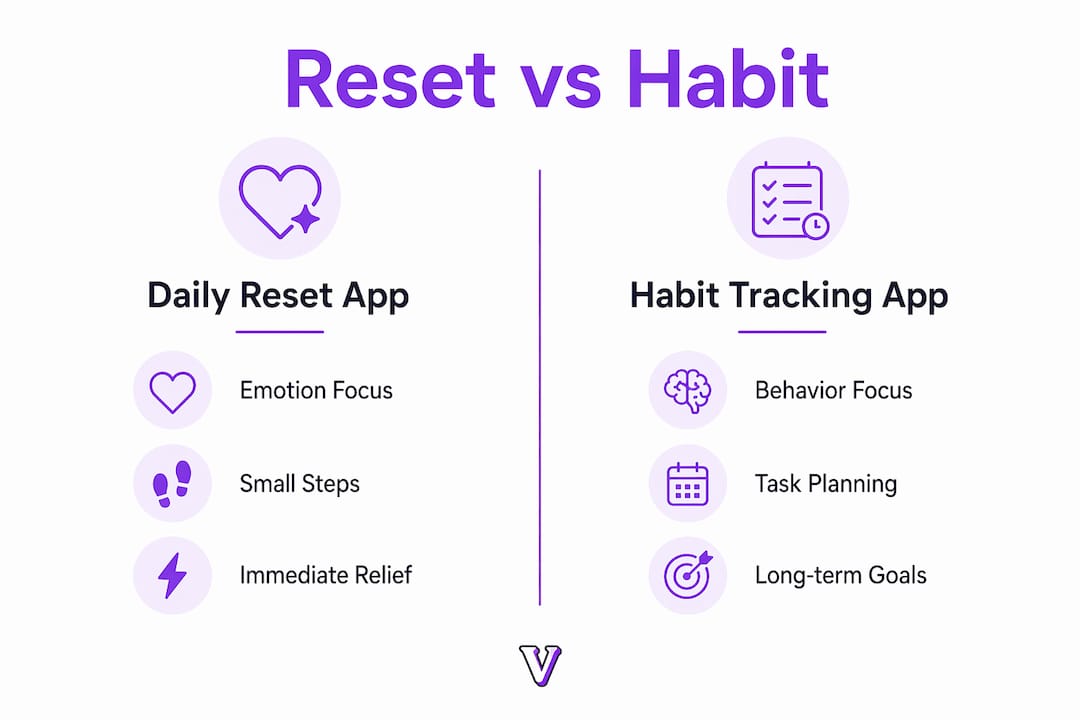
The distinction is not just philosophical. It affects whether you actually open the app on your worst days. A self-care reminder app that makes you feel guilty for missing a session defeats its own purpose.
How to integrate a reset app into your daily routine
The most effective integration strategy starts small. A single two-minute check-in in the morning or during a stressful moment at work builds more sustainable momentum than a rigid 30-minute daily ritual.
Here is a practical daily structure that works for most people:
- Morning check-in (2–5 minutes). Open your reset app before checking email or social media. Answer the state-check prompt honestly. Let the app guide one breath exercise or suggest one small intention.
- Midday pause (2–3 minutes). Use a self-care reminder app notification as a cue, not a command. If you feel fine, skip it. If you feel tense, use it.
- End-of-work shutdown (5–10 minutes). Apps like The Everyday Reset include a coach or chat feature for a brief guided wind-down. This transition moment is one of the highest-value reset opportunities in the day.
- Before sleep (optional, 5–30 minutes). Medito offers guided breathing sessions ranging from quick calming exercises to longer mindfulness courses and sleep aids. Use this slot only if it feels natural, not obligatory.
The key principle is that state-based check-ins produce faster relief than pre-set schedule alerts. An app that asks "what are you feeling right now?" creates immediate awareness. A notification that fires at 3:00 PM regardless of your state is just noise.
Pro Tip: Not every day needs a full session. On difficult days, opening the app and answering one prompt counts as a win. Flexibility is what makes these tools sustainable over months, not weeks.
Pairing a reset app with a broader mindfulness checklist can also help you identify patterns in when and why you need resets most.
Which daily reset apps are worth trying?
Several apps stand out in this category, each with a distinct approach and user profile.
| App | Core method | Session length | Cost | Best for |
|---|---|---|---|---|
| Reset with Thea | Voice analysis, breathwork | 2–30 minutes | Subscription | Emotional regulation, stress |
| SensoryGift Reset App | State prompts, small steps | 2–10 minutes | Free | ADHD, neurodivergent users |
| MyRoutine | Flexible mood and habit tracking | Varies | Free/paid | Routine building with flexibility |
| Medito | Guided meditation, breathing | 3–30 minutes | Free | Mindfulness, sleep, calm |
Reset with Thea is the most technically sophisticated option. Its voice-led approach means you do not need to articulate your feelings in words. The app reads your voice and responds accordingly. The subscription cost reflects that depth of personalization.
The SensoryGift Reset App is the most accessible. It is free, works offline with printable supports, and is explicitly designed for people who find digital wellness tools overwhelming. Its failure-tolerant design removes the shame cycle that causes most people to abandon wellness apps within weeks.
Medito sits closer to the meditation end of the spectrum. It is a strong choice if your primary need is a mindfulness reset app with structured breathing and sleep support. Its free model makes it easy to try without commitment.
MyRoutine bridges reset and habit tracking. It allows you to miss days without losing progress, which makes it one of the more forgiving apps for mental clarity in this category. It suits people who want light structure without the pressure of a strict habit tracker.
Key Takeaways
A daily reset app works best when it validates your emotional state first and asks only the smallest possible next step from you.
| Point | Details |
|---|---|
| Reset apps prioritize the present | They focus on your current emotional state, not future goals or task completion. |
| Session length is flexible | Most apps offer sessions from 2 to 30 minutes, making them usable in any schedule. |
| Missed days should not matter | Apps designed with failure tolerance sustain long-term use better than streak-based tools. |
| Voice and breath beat checklists | Physiological feedback methods like voice analysis reach your nervous system faster than cognitive prompts. |
| Accessibility drives adoption | Offline supports and low-demand design make reset apps genuinely usable on your hardest days. |
What Voisley has learned about emotional resets
The most common mistake people make with reset apps is treating them like productivity tools. They set daily reminders, track completion rates, and feel guilty when they skip a session. That mindset turns a tool for relief into another source of pressure.
What actually works is the opposite approach. The apps that stick are the ones that ask nothing of you on bad days. They offer a door, not a deadline. The SensoryGift Reset App's opening question, "What kind of hard is this?", is a masterclass in this philosophy. It does not assume you need to be fixed. It assumes you need to be heard.
At Voisley, we see this pattern clearly in how people engage with guided journaling and mood tracking. The people who build lasting emotional wellness habits are not the ones who never miss a day. They are the ones who return after missing a week without judgment. The tool has to make that return feel easy, not shameful.
The next frontier for reset apps is deeper personalization without more complexity. Voice analysis is a promising direction, but the real opportunity is in apps that learn your patterns over time and adjust their prompts accordingly. A reset app that knows you tend to spiral on Sunday evenings and gently checks in at 7:00 PM is more useful than any generic reminder. That kind of emotional regulation support is where the category is heading, and it is worth paying attention to.
— Voisley
Start your daily mental reset with Voisley
If you are looking for a daily wellness app that goes beyond simple reminders, Voisley combines guided journaling, mood tracking, and AI-powered insights into one private space for self-reflection.

Voisley offers multiple journal types including gratitude, shadow work, and future goals, along with emotional trend visualizations that help you understand your patterns over time. It is built for people who want more than a checklist. Whether you are just starting a mindfulness practice or deepening an existing one, Voisley gives you the structure to reflect without the pressure to perform. Explore Voisley and find the self-care tools that fit your life.
FAQ
What is a daily reset app?
A daily reset app is a digital tool that helps you quickly recalibrate your emotional and mental state through brief, low-demand exercises like breathwork, state-check prompts, or guided mindfulness. It focuses on your present moment rather than long-term habit tracking.
How long does a daily reset session take?
Reset sessions typically range from 2 to 30 minutes depending on the app and your needs. Some apps offer sessions as short as a few seconds for a quick nervous system reset.
Are daily reset apps good for people with ADHD?
Yes. Apps like the SensoryGift Reset App are specifically designed with neurodivergent users in mind, offering low-demand prompts, offline printable supports, and no streak penalties that could trigger shame or avoidance.
How is a reset app different from a meditation app?
A reset app focuses on identifying and validating your current emotional state before guiding any intervention. A meditation app like Medito typically delivers structured breathing or mindfulness sessions on a schedule, regardless of your present state.
Can I use a reset app alongside therapy or coaching?
A daily reset app works well as a complement to therapy or coaching, not a replacement. It supports the small daily moments between sessions, helping you build emotional self-awareness that makes your deeper work more effective.