

TL;DR:
- Supporting mental clarity requires consistent habits like quality sleep, regular exercise, and proper hydration. These efforts improve focus and emotional regulation over weeks and months, not overnight. Developing structured mental and emotional practices enhances long-term cognitive resilience and sharp thinking.
Mental clarity is the ability to think sharply, focus without effort, and regulate your emotions through consistent, purposeful habits. Knowing how to support mental clarity means more than just drinking coffee or sleeping in. The most effective practices combine quality sleep, regular exercise, smart nutrition, and structured mental habits. Tools like Voisley and frameworks from Harvard Health and Make10000Hours confirm that clarity improves within weeks when you address the right foundations. This guide walks you through each one with the science and the practical steps.
How to support mental clarity through better sleep
Sleep is the single most powerful lever for mental clarity. Seven to nine hours of consistent, quality sleep improves cognitive function within one to two weeks. That timeline matters because most people expect overnight results and quit too soon.
Your brain consolidates memory, clears metabolic waste, and resets emotional regulation during deep sleep. Alcohol and blue light from screens both suppress melatonin and cut deep sleep short. Cutting screen time 60 minutes before bed and keeping your room at 65–68°F are two of the highest-impact changes you can make.
Practical sleep habits that work:
- Set a fixed wake time seven days a week, even on weekends
- Keep your bedroom at 65–68°F with blackout curtains
- Avoid alcohol within three hours of bedtime
- Stop screens 60 minutes before sleep
- If you wake at night, write down any open tasks rather than lying there thinking
Pro Tip: If you wake up foggy, drink 400 ml of water before reaching for caffeine. Drinking water is one of the fastest resets for brain fog and takes under two minutes.
What role does exercise play in boosting mental clarity?
Exercise is the closest thing to a prescription medication for brain health. Harvard Health describes it as a lifelong cognitive prescription, not a short-term fix. That framing changes how you approach it.
A 2025 meta-analysis found that resistance training performed for 45 minutes twice weekly produced a standardized mean difference of 0.55 for global cognitive function. Mind-body exercises like tai chi and yoga showed even stronger results for working memory, with a standardized mean difference of 2.45, particularly in adults aged 65–75. These are not small effects.
Aerobic activity, including brisk walking at moderate intensity, increases blood flow to the prefrontal cortex. That region handles planning, decision-making, and emotional control. Consistent moderate exercise builds brain volume in memory and thinking regions over roughly six months. Patience is not optional here.
"Think of exercise not as something you do until you feel better, but as something you do for the rest of your life." — Harvard Health
Starting points that remove friction:
- Begin with 20-minute brisk walks three times per week
- Add resistance training twice weekly using bodyweight or light weights
- Try one yoga or tai chi class per week for working memory benefits
- Track your sessions to build the habit before increasing intensity
How do nutrition and hydration improve focus and concentration?
The brain is roughly 75% water. Even slight dehydration impairs focus and clarity before you feel thirsty. Drinking water consistently throughout the day is not optional for clear thinking.
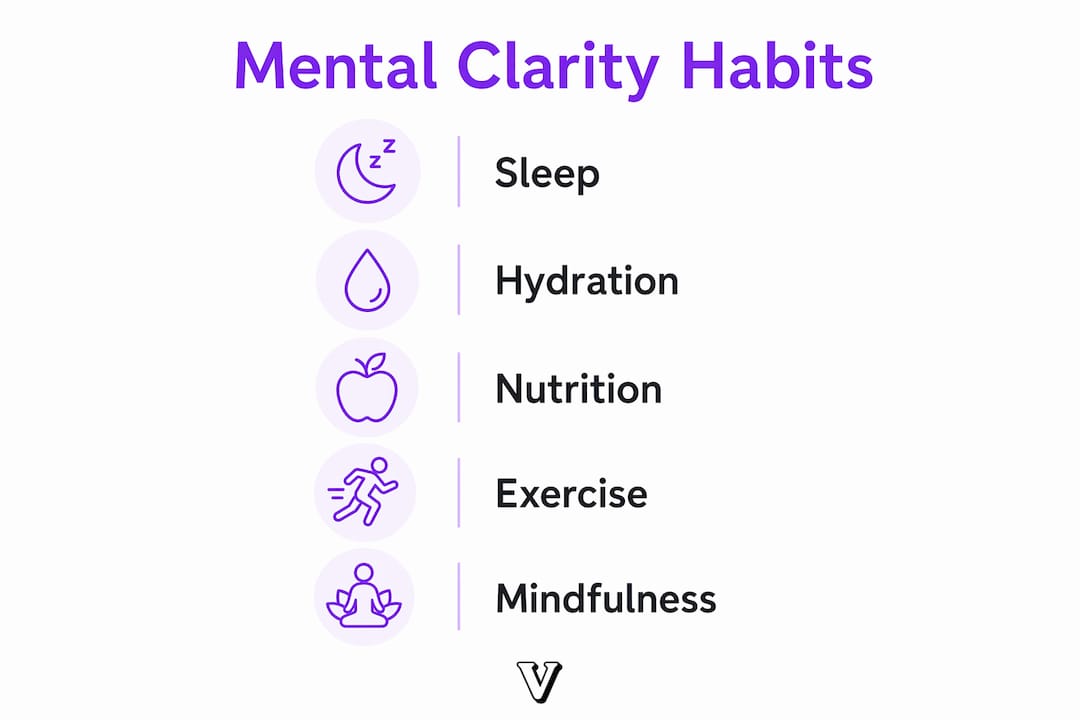
For fast relief from brain fog, 400 ml of water works as an immediate reset. That is roughly one and a half cups. It does not replace foundational habits, but it buys you 20–30 minutes of sharper thinking when you need it.
Nutrient-dense foods that directly support brain function:
- Omega-3 fatty acids (salmon, sardines, walnuts): support cell membrane integrity and reduce neuroinflammation
- B vitamins (eggs, leafy greens, legumes): fuel neurotransmitter production and energy metabolism
- Magnesium (dark chocolate, pumpkin seeds, spinach): regulates stress response and supports sleep quality
- Zinc (beef, chickpeas, cashews): supports memory formation and immune function in the brain
Regular, balanced meals prevent blood sugar dips that cause the mid-afternoon crash most people blame on poor sleep. Eating every three to four hours keeps glucose stable and focus consistent. Mindful eating, meaning slowing down and stopping before you are overfull, also prevents the post-meal cognitive slump that comes from diverting blood flow to digestion.
What mental habits help you maintain focus and reduce cognitive overload?
Multitasking is the fastest way to drain mental clarity. Focused 25-minute task blocks with short breaks maintain sharper, more sustained attention than switching between tasks. The brain does not actually multitask. It switches rapidly between tasks, and each switch costs time and mental energy.
Structured mental habits that protect your focus:
- Single-task in 25-minute blocks. Set a timer, close unrelated tabs, and work on one thing only.
- Write down open tasks. Unfinished tasks occupy working memory even when you are not actively thinking about them. Getting them out of your head and onto paper frees up cognitive space.
- Limit screen time outside work hours. Constant notifications train your brain to expect interruption, which makes deep focus harder over time.
- Practice five minutes of focused breathing daily. Slow, deliberate breathing activates the parasympathetic nervous system and reduces mental noise within minutes.
- Use a focus log. Tracking your peak focus times and fatigue triggers helps you schedule demanding work when your brain is sharpest.
Mindfulness and meditation reduce the mental chatter that competes with clear thinking. You do not need a 30-minute session. Five minutes of breath-focused attention each morning builds the neural habit of returning to the present moment. Voisley's journaling for emotional well-being is one structured way to offload mental noise and process recurring thoughts before they accumulate.
Pro Tip: Keep a running "brain dump" list throughout the day. Every time a stray thought interrupts your focus, write it down and return to your task. This single habit reduces cognitive interruptions significantly.

How do emotional regulation and social connections support clear thinking?
Chronic stress and depression directly impair cognitive function. This is not a soft claim. Social engagement and emotional regulation support neural networks and cognitive reserve, reducing the risk of cognitive decline. Strong emotional health and clear thinking are not separate goals.
"Social connection is one of the most underrated tools for maintaining cognitive sharpness across the lifespan." — Harvard Health
Practices that build emotional clarity:
- Journaling daily: Writing about your thoughts and feelings reduces rumination and improves self-awareness. Voisley's master emotional regulation guide outlines science-backed approaches.
- Gratitude practice: Noting three specific things you are grateful for each day shifts attention away from threat-based thinking and toward constructive focus.
- Scheduled social time: Regular, meaningful conversation with friends or family strengthens the neural networks that support memory and executive function.
- Stress boundaries: Identifying and limiting your top two or three chronic stressors has a more lasting effect than any stress-relief technique applied after the fact.
Mentally stimulating activities like reading, writing, and strategy games reduce the risk of mild cognitive impairment by 50% in adults in their 70s and 80s. Starting these habits earlier compounds the benefit. Emotional clarity and cognitive clarity reinforce each other. When you regulate your emotions well, your decisions improve, your focus sharpens, and your thinking becomes more reliable.
Key Takeaways
Supporting mental clarity requires consistent action across sleep, exercise, nutrition, and emotional habits, not a single fix.
| Point | Details |
|---|---|
| Sleep is the foundation | Seven to nine hours of quality sleep improves cognitive function within one to two weeks. |
| Exercise requires patience | Measurable brain benefits from moderate exercise take roughly six months to appear. |
| Hydration works fast | Drinking 400 ml of water is one of the fastest resets for brain fog and impaired focus. |
| Single-tasking protects focus | Focused 25-minute work blocks with breaks outperform multitasking for sustained clarity. |
| Emotional health drives cognition | Strong social connections and emotional regulation directly reduce cognitive decline risk. |
What I have learned from tracking mental clarity over time
The biggest mistake most people make is treating mental clarity as a problem to solve once. They fix their sleep for a week, feel better, and then slide back into old patterns. Clarity is not a destination. It is a daily output of your habits.
Tracking your own data changes everything. When you log your sleep duration, your peak focus windows, and your mood patterns, you stop guessing. You start seeing that your sharpest thinking happens between 9 a.m. and 11 a.m., or that two nights of poor sleep wipes out three days of good work. Personalizing your approach through self-tracking is far more effective than following generic advice.
The other trap I see constantly is overreliance on quick fixes. A cold shower or a nootropic supplement might sharpen you for an hour. But if your sleep is broken and you are chronically stressed, no shortcut closes that gap. Fast relief tactics like hydration, a short walk, and a breathing exercise are emergency resets. They are not a strategy.
Emotional regulation is where most people leave the most improvement on the table. You can have perfect sleep and a solid exercise routine and still think poorly if you are carrying unprocessed stress or social isolation. The practices that build self-awareness, including journaling, gratitude, and honest reflection, are not soft add-ons. They are core to how clearly you think.
— Voisley
Voisley supports your mental clarity practice
Mental clarity does not happen by accident. It is built through daily habits, honest self-reflection, and the right tools to track your progress.

Voisley is a digital platform built for exactly this work. With guided journaling, mood tracking, AI-powered insights, and personalized prompts across gratitude, shadow work, and future goals, Voisley gives you a structured space to process your thoughts and understand your emotional patterns. The mental clarity tips on Voisley's blog go deeper on each strategy covered here. If you are ready to build a practice that actually sticks, start with Voisley and see what consistent self-reflection does for your focus.
FAQ
How long does it take to improve mental clarity?
Cognitive function improves within one to two weeks when you consistently get seven to nine hours of sleep and stay hydrated. Deeper benefits from exercise take roughly six months of consistent moderate activity.
What is the fastest way to clear brain fog?
Drink 400 ml of water, take a 10-minute walk, or practice focused breathing for five minutes. These tactics reset your focus quickly but do not replace foundational habits like sleep and exercise.
Does exercise really improve cognitive function?
Yes. Resistance training twice weekly and mind-body exercises like yoga and tai chi show measurable improvements in working memory and global cognitive function, especially in adults over 65.
Can journaling help with mental clarity?
Journaling reduces rumination, offloads working memory, and builds self-awareness. These effects directly support clearer thinking and better emotional regulation throughout the day.
How does social connection affect mental clarity?
Strong social engagement supports neural networks and cognitive reserve. Social connection reduces cognitive decline and helps maintain sharp thinking across the lifespan.